
great ave ruinsOpening the notebook…

The Impossible Fact
The small, impossible fact, of finding a light on in a house I had never seen before.
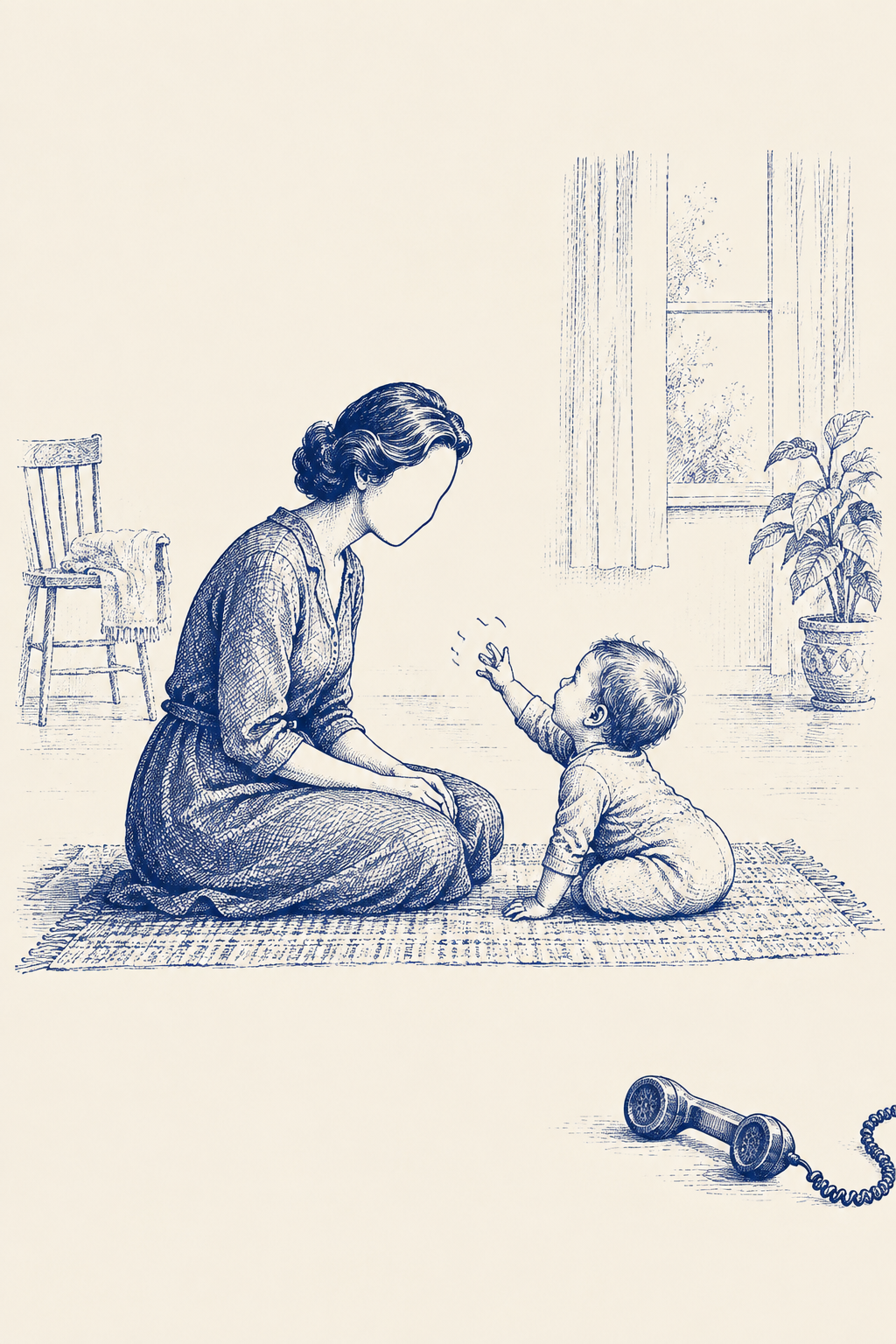
Ed Tronick: Still Face Experiment
A baby forgives a still face in minutes. Its body, two weeks later, has not. How much of adulthood is the history of what happened after someone stopped looking back?

Ninh Binh: Karst
Is it safer to understand things than to feel them? Has knowing ever actually protected me, and if it hasn't, why I do still reach for it first? About loving something that can't love you back, and about what knowing does and doesn't do.

The Original Daughter: The Genevieve Problem
Local literature can offer the pleasure of being seen; here, it offered the less comfortable experience of being unable to look away.

The Cost of Looking Unharmed
To be believed, you must explain. You must open the wall again, let the water show itself, pay the cost of telling. We would never ask this of the physical. We would never say: break it again, so we can see.

Pulau Ubin: The Useful Ghost
I came to Ubin wanting proof that a slower life had survived somewhere. When I found traces of it, I began to grieve. Perhaps this is how a useful ghost is made: we ask a living place to hold the past for us, then struggle to see the people who are still there.

The Waggle Dance of Unlived Sweetness
A worker lives six weeks, visits a million flowers, yields ¹/₁₂ teaspoon of honey she never tastes; which is similar to the human experience of finding something beautiful, then immediately translating it into service, information, care, or work.

The Last Thousand Feet
You can see the shape of a life, or you can live in it. Written on the descent into Da Nang.

What Gives Us Our Names
When a book gives me something modest but real, am I asking it for more because it promises more? Or because I find it difficult to let a familiar truth remain enough?
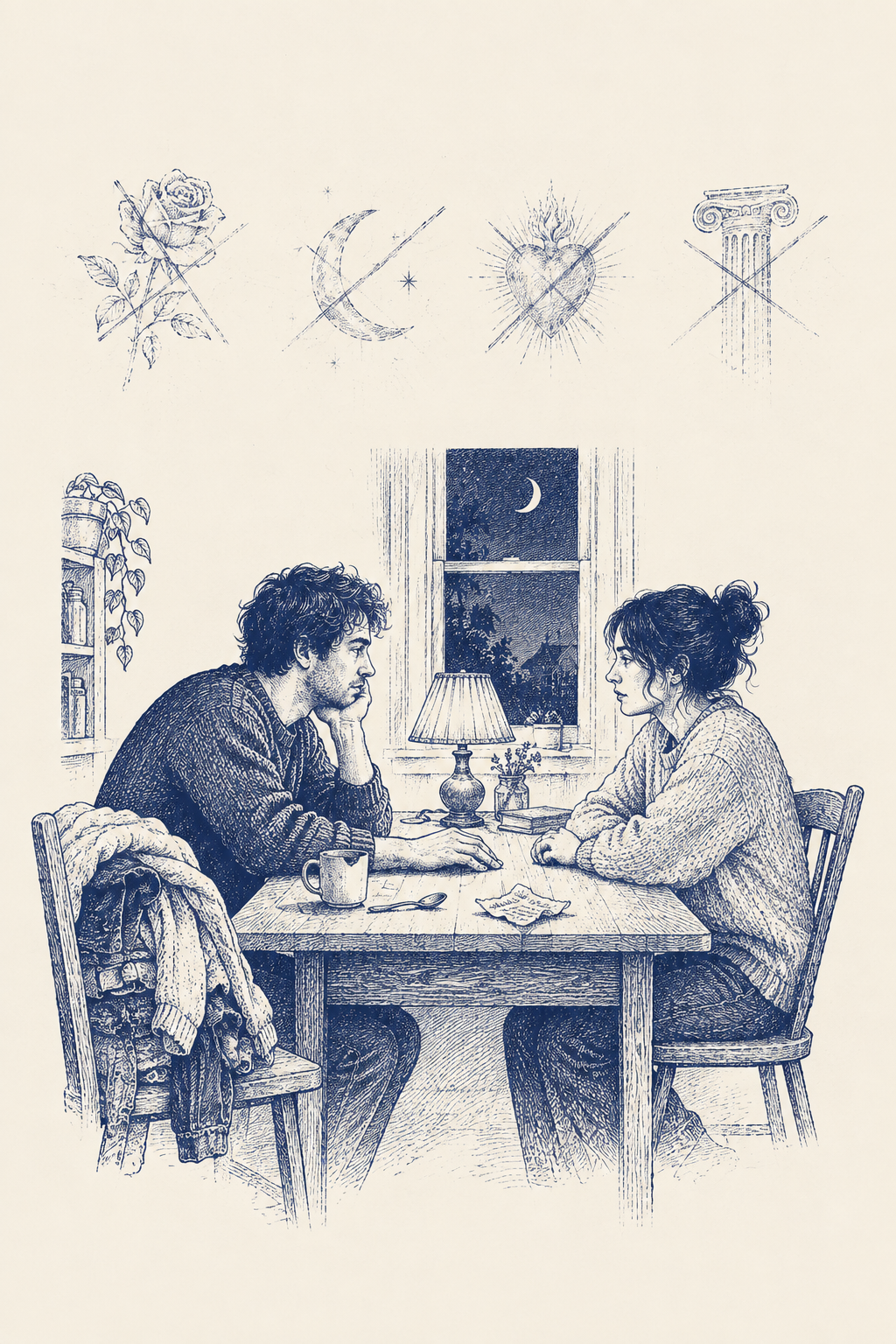
I Hate Love Poems (Mostly)
Most love poems choose beauty over the beloved’s actual reality. This is about the poems that do not.

The Structural Transformation of Wellness
We are asked to secure the conditions for a good life, even when we cannot individually determine our working hours, the price of food, the shape of our neighbourhood, or whether there is somewhere to gather without paying.

Fremantle: The Chart and Map Shop
We cannot stop making maps, and we cannot make one that is innocent. How do I take responsibility for a way of seeing that I need in order to move through the world, knowing that someone else may have to live with what I left out?

Missy
I have never lived in India. I do not speak Malayalam beyond fragments. And yet there are moments when reading Rao's descriptions of South India, of the quality of heat, of the way obligation moves through a family like weather is when something in me goes still. Not nostalgia. Something older than that. The recognition of a shape.

The Necessary Interruption: Adult Gap Years
If I stop doing what makes me recognisable to myself and others, will there still be a life for me to return to? If I must promise that stopping will eventually make something of me, have I ever truly been permitted to stop?

On Transformance
A plant leaning toward the window is, at the same moment, gripping harder at the root.

Melaka: My City of Arches
The mother tiger isn't looking at her cub. She's watching what might come for it.

Crudo: How to Unfold Yourself Without Burning the World Down
I keep wondering whether commitment confines us, or gives shape to something larger than the self. What emerges is the friction between the “I” and the “we”. Crudo suggests that love is not resolution, but stamina: the willingness to remain inside the rawness of being seen.

The Poetry of Transparency
Our biology insists on honesty even when our psychology does not. The flush rising in our cheeks, tears springing to our eyes, our voice breaking when we speak of what matters. We are, whether we like it or not, transparent.

On Emotionally Focused Therapy
By 1912, the letters between Sigmund Freud and Carl Jung had changed. What had begun as intellectually alive, shot through with mutual recognition had begun to curdle. Underneath the careful theoretical arguments, something else was audible. Sue Johnson would have known exactly what she was looking at.

Hanoi: Monsoon Music Festival
We imagine that history happens to places. But history is just the accumulation of presence. Of nights like this one. Of people who came for ordinary reasons and left traces they never intended to leave.