
Melaka: My City of Arches
I went to Melaka for the currency exchange.
That's the honest truth. A Singaporean in Melaka is, among other things, a person doing quiet arithmetic. The ringgit conversion running like a background app while you order, browse, wander. Similar faces. Similar accent. The char kway teow tasting like something your grandmother's neighbour might have made.
Almost home. Which is different from home. And different from away.
I was told I couldn't miss Jonker. So I strolled the river area, lived in that neighbourhood for a few days, explored the streets without agenda. No itinerary. No must-sees beyond the one everyone mentioned.
I didn't realise it then. I only did later, when I looked at my photos.
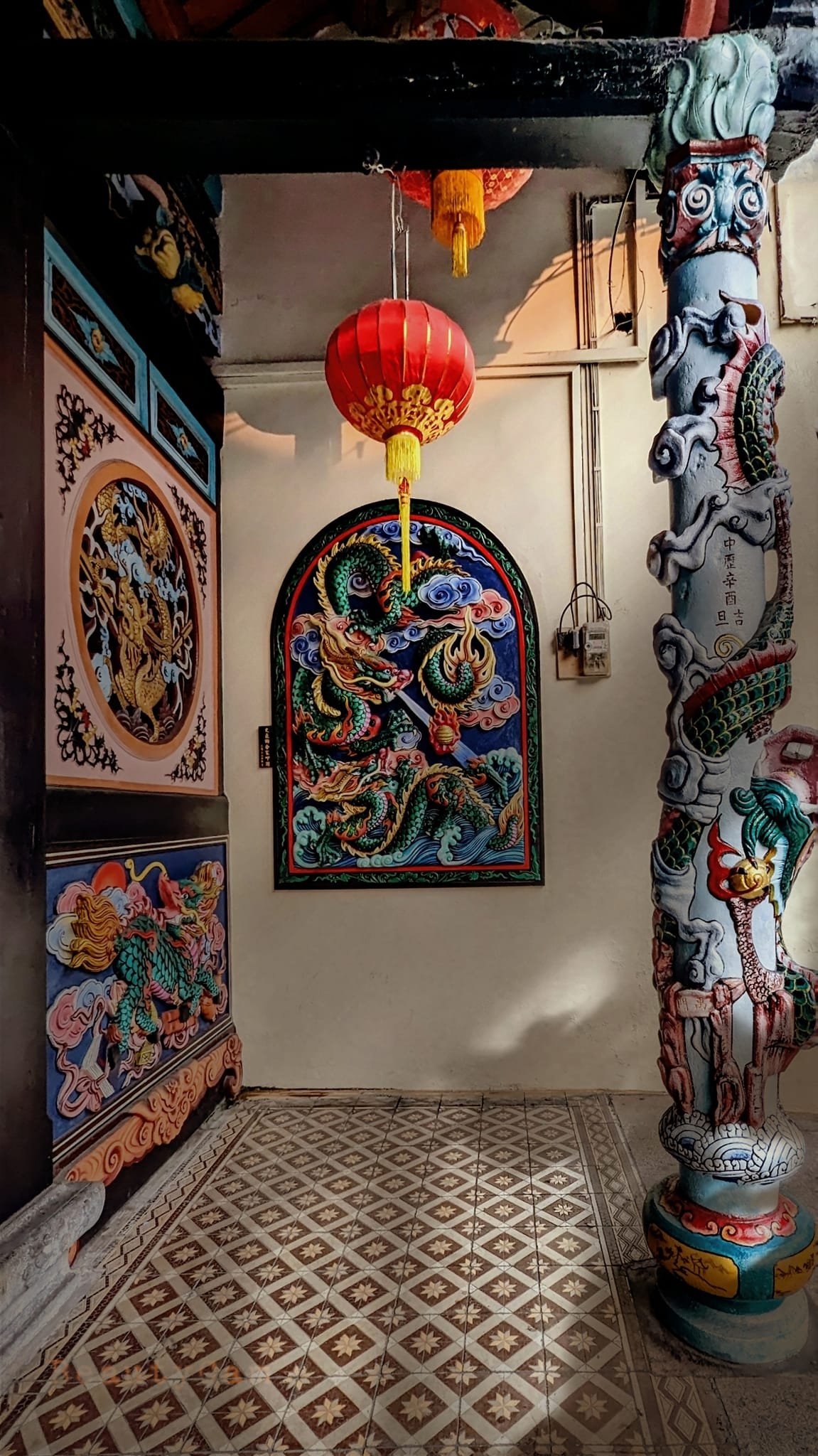
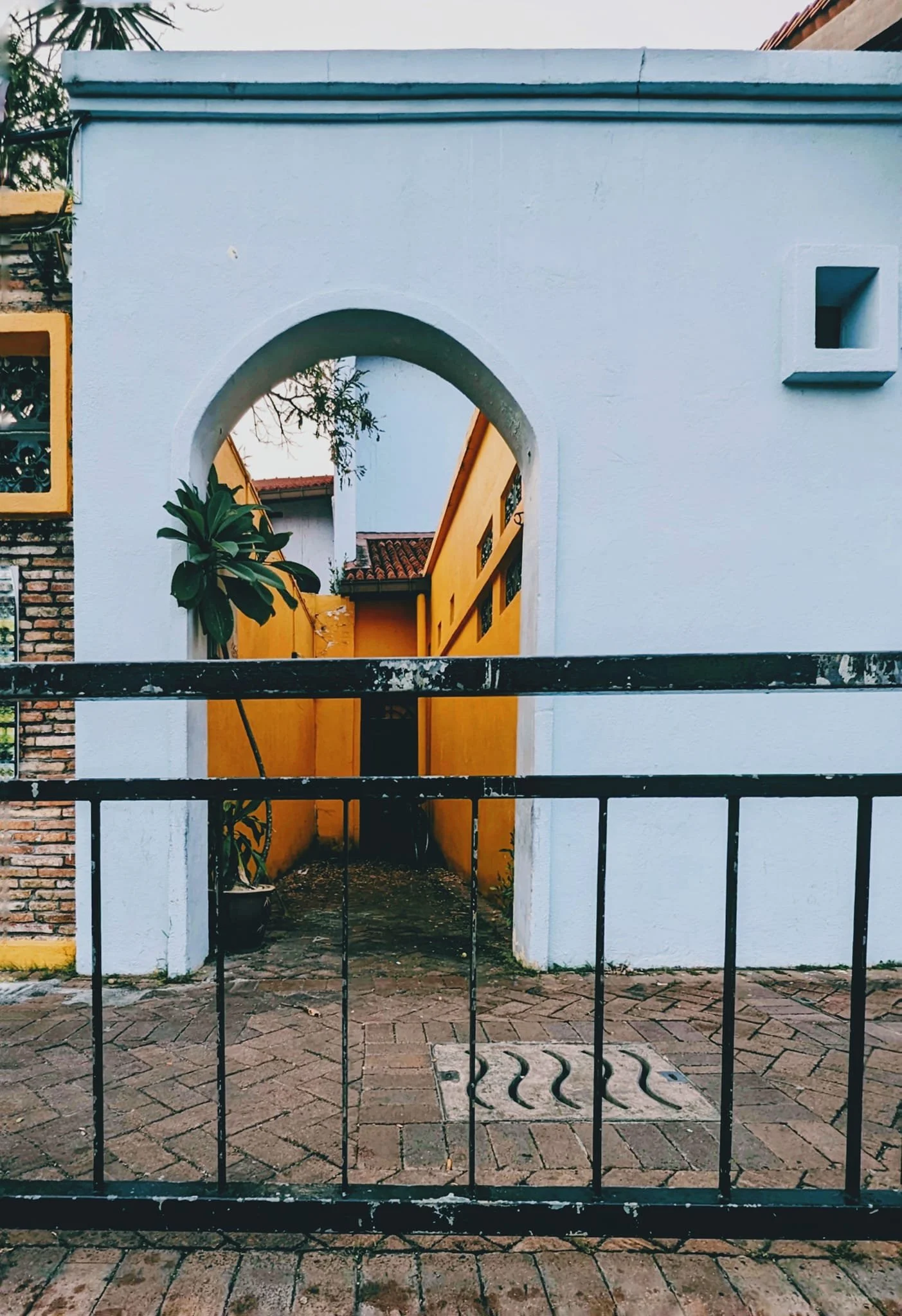
You don't notice a pattern until it repeats enough times to become undeniable. Melaka kept making arches — in temple panels, in relief sculptures, in passageways cut through whitewashed walls, in the transom above a locked wooden door. Every arch framing something. Every arch promising entry. And almost every arch, when I walked toward it, turning out to be sealed.
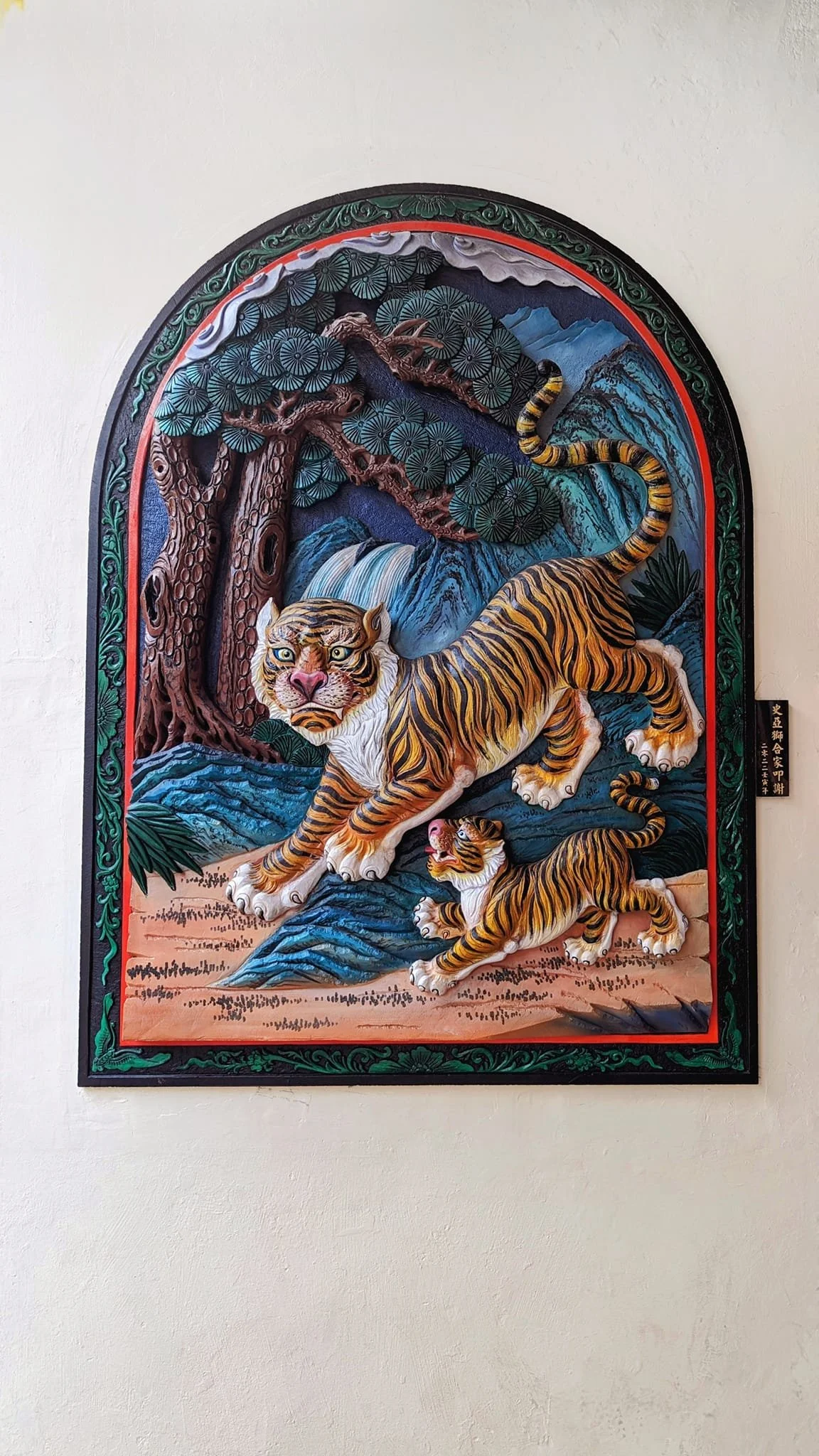
The dragon panel in the temple — arched. The tiger relief — arched. The corridor behind the iron gate — framed by a perfect arch, warm yellow walls visible beyond it, a plant pushing through, the whole thing lit like an invitation.
The tiger stopped me longest. A mother and cub, rendered in painted relief, set inside an arched frame. But the mother isn't looking at her cub. She's low, coiled, eyes forward, locked on something outside the frame entirely. Her posture is not tenderness. It's vigilance. The cub is safe precisely because she is watching something else, something approaching, something the viewer cannot see. The arch frames this scene of protection as if it were simply decoration. It isn't. It's a whole philosophy of what it costs to keep something safe.
I kept walking. The streets of Melaka do that to you. The humidity I’m well accustomed to keeps you moving along before you've finished thinking. Another shophouse. Another temple. Another corridor glimpsed through another gate.
And then I tried the tanghulu.
I know it's available in Singapore. I've walked past it countless times. But I tried it for the first time in Melaka, from a street vendor near Jonker. The fruits on the skewer, lacquered in that hard shell of crystallised sugar — transparent, glassy, perfectly curved. An arch in miniature. You can see exactly what's inside and still the surface transforms everything about the encounter.
I bit through it. The sugar cracked cleanly.
I've been thinking about why I tried it there and not here. Singapore has tanghulu. I walk past it. I keep walking. But in Melaka, in the looseness of being almost-home-but-not, the slight foreignness of the place gave me permission to try what was already available. As if being away from home, even slightly, even by just a currency conversion's worth of distance, loosens something in me. Makes me willing to bite through surfaces I’ve been circling for years.
This is what travel does, when it works. Not the grand displacement of arriving somewhere utterly foreign, where everything demands translation. But the subtler disorientation of the almost-familiar — a city that looks like home, sounds like home, tastes like home, and then shows you a locked door with gold calligraphy and asks you to sit with the fact that you will never know what's behind it.
I went for the currency exchange. I came back thinking about arches.
