
I HAVEN’T RESOLVED: When a book gives me something modest but real, am I asking it for more because it promises more? Or because I find it difficult to let a familiar truth remain enough?
I had a rule. Over fifty books on my TBR list. I know myself well enough to know that walking into a bookshop at the Singapore Writers Festival with a rule is essentially just a formal announcement that I am about to break it. But I committed to the rule. I said it out loud. I shared it with a friend. I meant it.
And the said friend recommended this. Forty-something pages. Slim enough to fit in a pocket. Light enough that picking it up felt like barely a decision at all.
I bought it. Of course I bought it. I read it over a hair colour appointment in the gaps between conversation with my stylist, with the colour processing and nowhere to be. By the time they rinsed me out, I was done. Two hours. Maybe less.
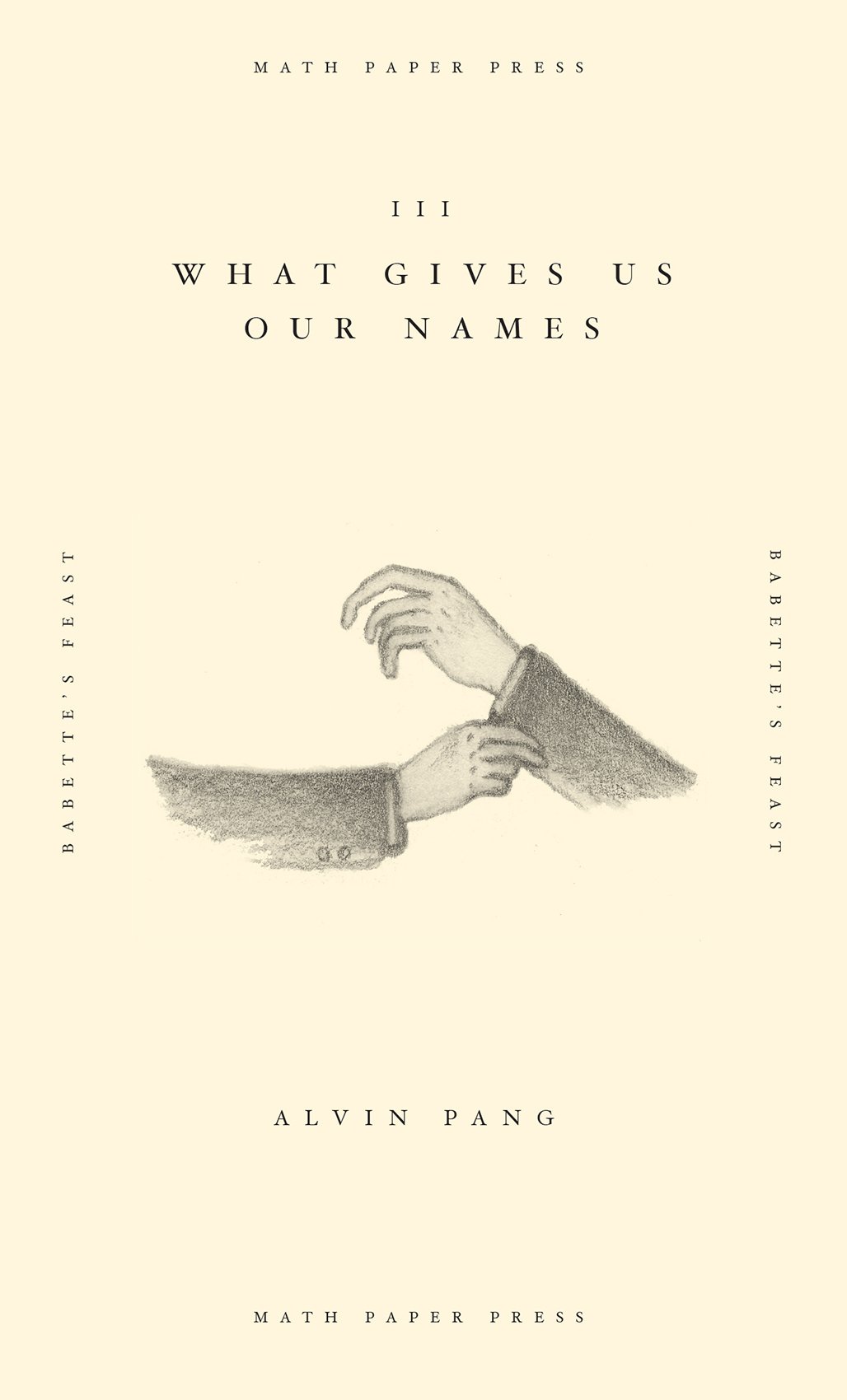
Alvin Pang personifies human qualities and writes each one as a character. Passion. Purpose. Success. Failure. Courage. Regret. They have lives. They have relationships. They marry badly and leave well and find each other again in the ways these things do. Regret, inevitably, catches up.
The form is old. Allegory. Personification. Bunyan did it with more theology. Spenser did it at epic length. Pang does it in forty pages of clean prose, and what he's really making underneath the individual portraits is a map of how emotions move in relation to each other.
The Ecosystem of a Self, Fairy Tale Edition
What Gives Us Our Names is, at its core, a fairy tale for adults. The morals are not hidden. The characters are not complex. The wisdom on offer is the kind you recognise immediately. I re-read Hansel and Gretel sometimes. Because sometimes I want the shape of a story I already know, the comfort of the familiar arc, the moral delivered cleanly at the end. There is no shame in this. It is a different kind of reading, serving a different kind of need.
Pang's book is that. Several small stories with messages you already know, told well enough that being reminded of them feels worthwhile. The trouble is the book doesn't entirely know this about itself.
There is an air of self-importance here that occasionally tips the reading from pleasurable into effortful. Not in the prose, which is mostly clean and precise. In the posture. In the way the book presents itself as wisdom in portable form with its design and cadence.
That said, fairy tales don't apologise for being fairy tales. They commit. What Gives Us Our Names sometimes commits and sometimes hedges, reaching for a profundity it hasn't quite excavated. The moments where it tips from illuminating into obvious are the moments where the allegory closes something down rather than opening it up. Pang is a poet, and his best moments here do what the best prose poems do: compress, surprise, work harder than their length suggests.
