
Violence and Aurora Borealis
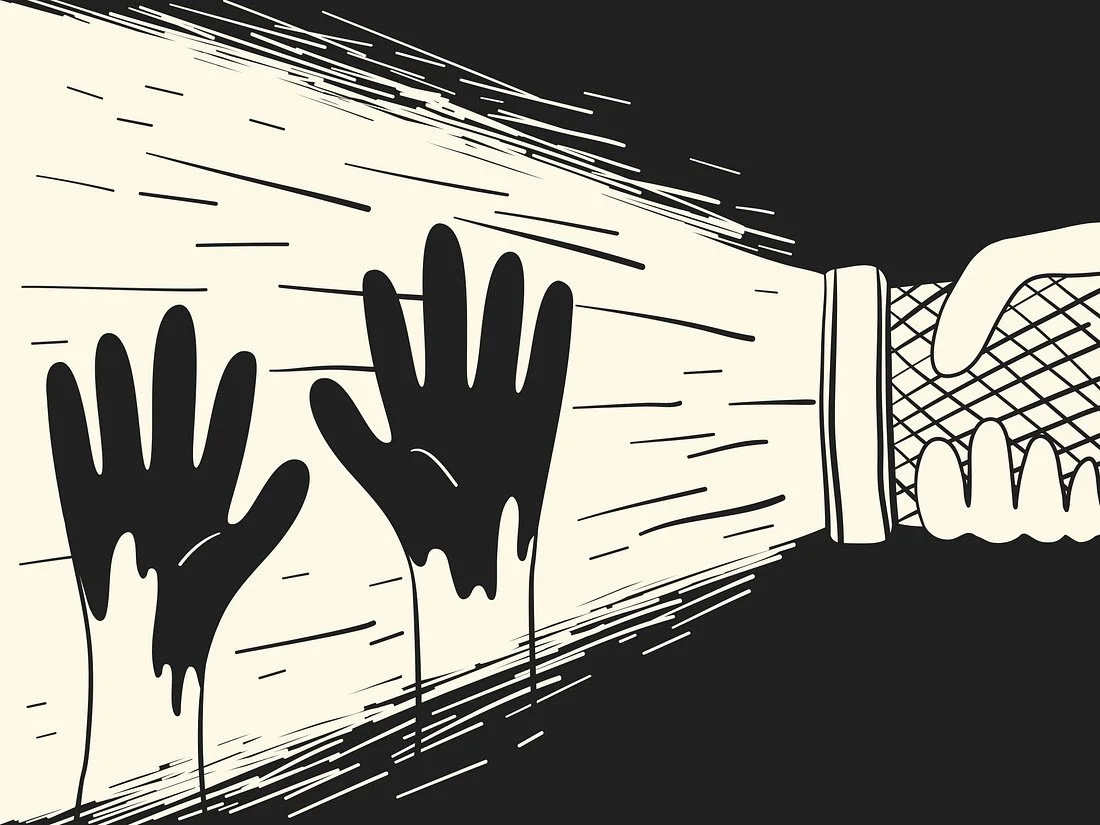
I think about the women I know who stay. Not in Alaskan cabins but in city apartments, suburban houses, relationships where they have learned to read atmospheric pressure the way Leni reads approaching storms. They have become experts at noticing. At predicting. With hypervigilance that looks like strength, like intuition, like love - until you recognise it as survival.
The Designated Devil: Why Some Families Needs One
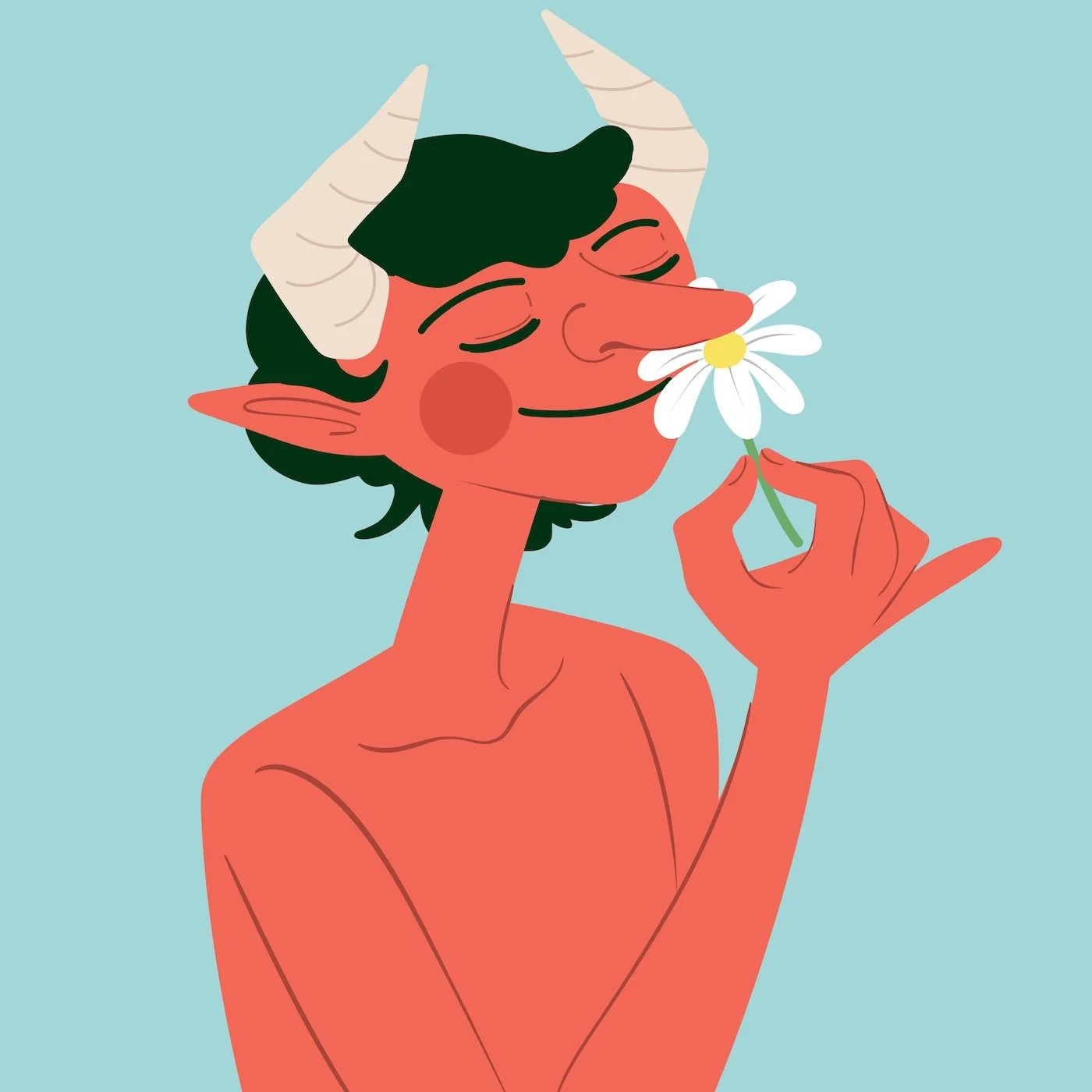
There is often someone in every family, every office, every system, who carries what others cannot: tension, contradiction, shadow. Quiet, measured, almost invisible, they absorb the unspoken, remember what others forget, and navigate the world with an acute attentiveness born of necessity. They are the designated devils whose labour shapes relationships, organisations, and even societies. To notice them is to recognise the invisible currents that sustain our lives, and to wonder what might shift if we finally acknowledged the work that holds the world together.
How Ordinary Became Extraordinary: The Structural Transformation of Wellness
Through the 1980s and 1990s, the infrastructure that had supported ordinary wellness began to change shape. Where there had been collective structures making certain things reliably available, there were now gaps. And into those gaps, wellness, as an industry emerged and expanded precisely as these older forms of infrastructure transformed. But it did not propose rebuilding what had changed. It did not suggest better food systems, neighbourhoods designed for daily movement, public spaces that supported gathering. Instead, it offered individual solutions to what had been collective functions.
What Survives: On Cathy Rentzenbrink's Write It All Down
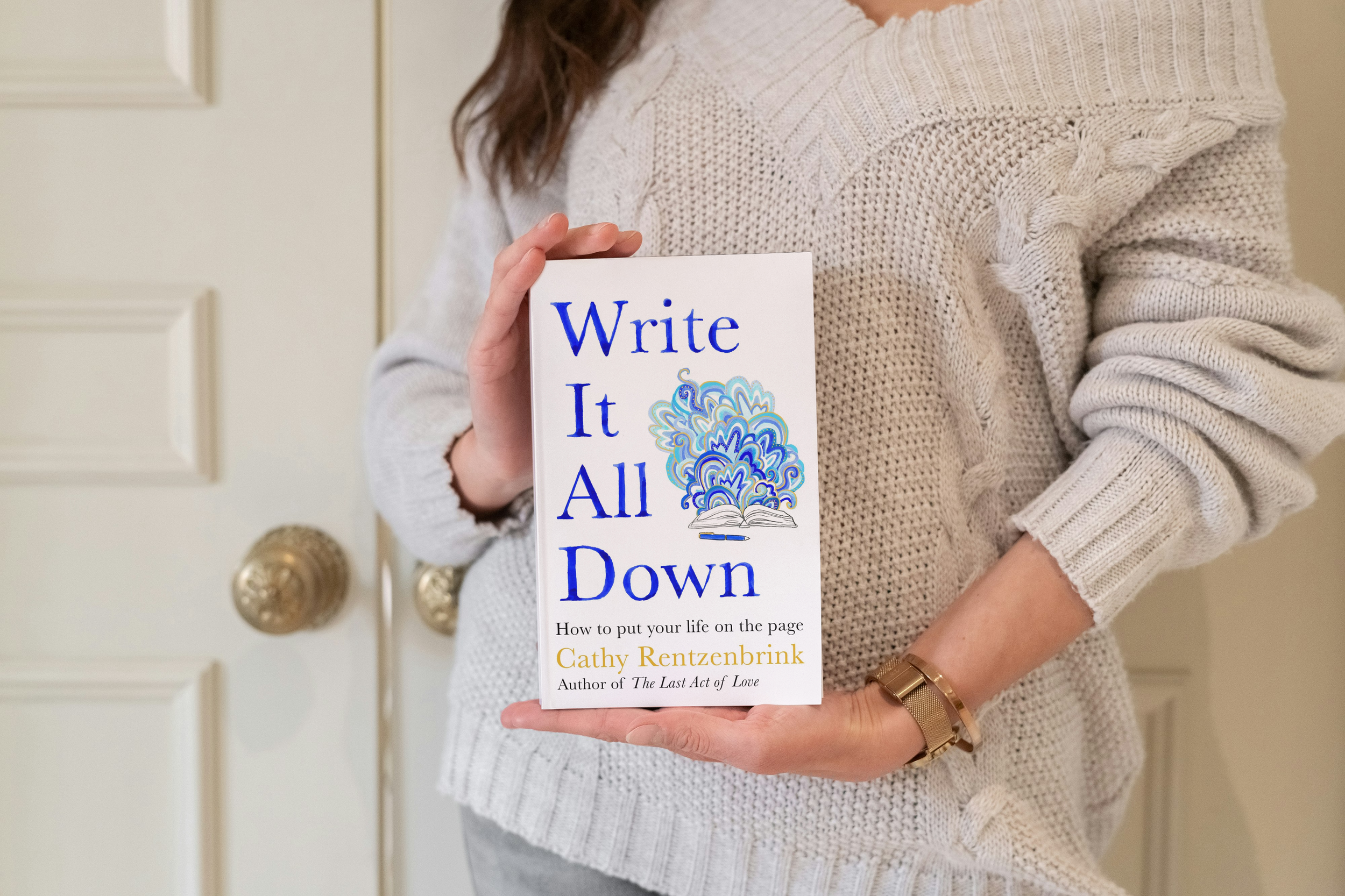
Cathy Rentzenbrink's Write It All Down promises solace through memoir writing, but beneath the therapeutic framing lies something older: the basic practice of sustained attention to your own experience. This review excavates what survives the self-help overlay. The craft instruction, the honest admission that writing remains difficult, and the mechanics every memoirist needs. Not therapy.

Dear Nora Seed: What If You Didn't Have to Learn a Lesson?
I finished my review of The Midnight Library and sat with my journal the next morning. I wished someone had been more patient with Nora before she started converting every experience into lessons. So I wrote her a letter, because sometimes the most honest way to examine what a book gets wrong is to offer what it couldn't give its protagonist.
What follows isn't literary criticism. It's what I would have said if I'd found Nora in that library before Mrs. Elm began her guidance, and before the infinite possibility collapsed into the single acceptable interpretation.

The Midnight Library Discussion Questions: For Book Clubs Who Want to Sit With What's Unresolved
Most discussion guides for The Midnight Library ask what lessons Nora learns about perception, kindness, and appreciating life. But after writing my review of the book, I kept thinking about all the questions it wouldn't let me ask. So I wrote different questions. Questions that go toward what's unresolved rather than what the book teaches. Questions for book clubs who want to dwell in uncertainty rather than rush toward agreed-upon insights.

The Library Becomes a Lecture Hall: On Matt Haig's The Midnight Library
An infinite library existing between life and death should be a space for dwelling. But Matt Haig's library isn't interested in dwelling. It's interested in lessons.
Within pages of Nora Seed's arrival in this between-state, the infinite library reveals itself as something closer to a self-help seminar with particularly good production values. Every life Nora samples becomes a parable. Haig has created an infinite possibility space and turned it into a vision board workshop.
Tanghulu at Forty
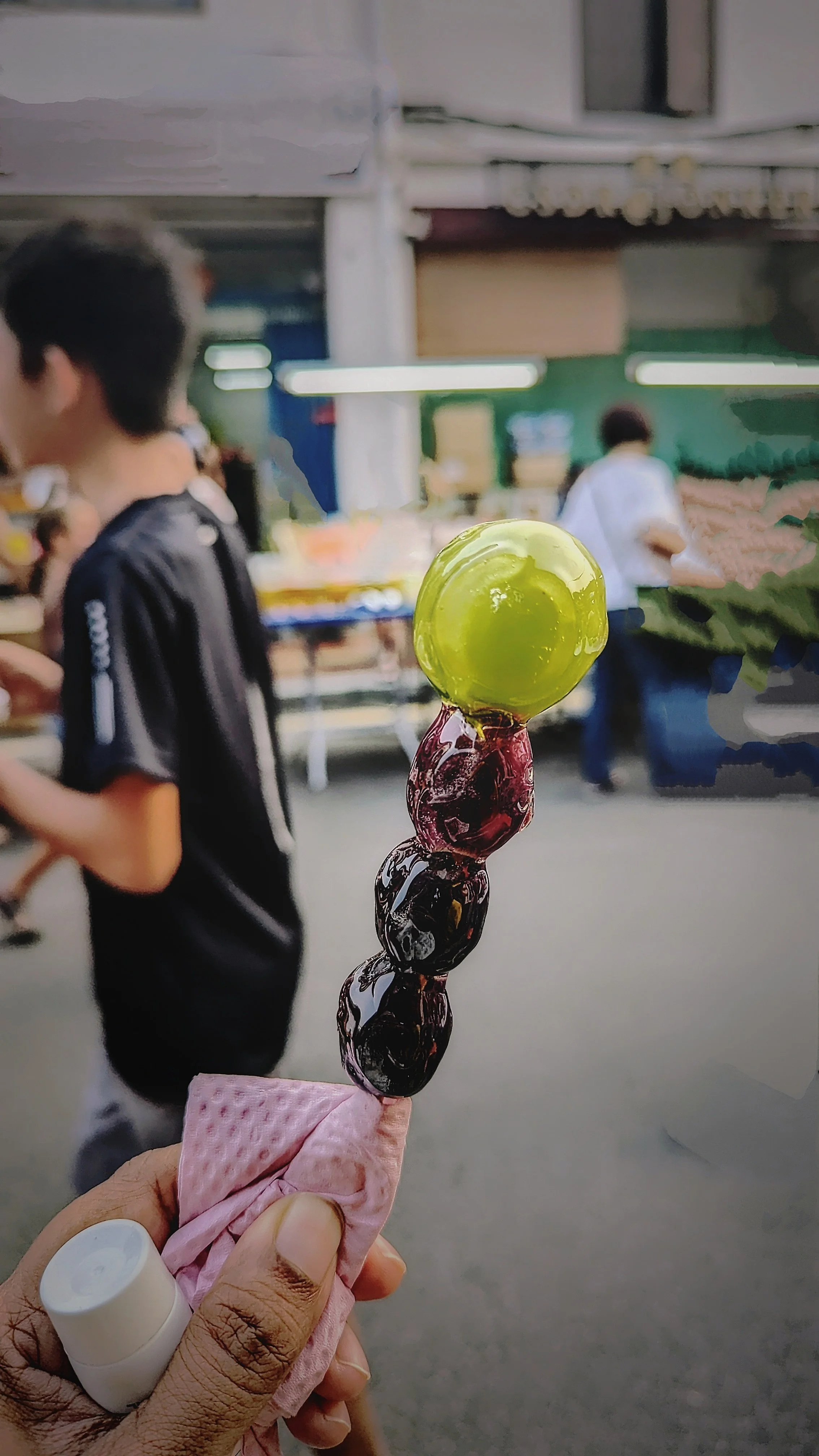
The vendor hands it to me and says "very traditional, Chinese New Year snack" and I'm standing there thinking: I learned about this from teenagers on TikTok three weeks ago and now I'm eating it in a UNESCO heritage zone in Melaka, and I'm Singaporean Indian so none of this - not the snack, not the festival, not even really this street - has anything to do with me. But here I am anyway. I've spent forty years like this, actually - living alongside Chinese culture without ever being inside it. And now the internet has made it so I can eat grapes coated in sugar in Malaysia because an algorithm decided this northern Chinese street snack should matter to me, and I'm trying to figure out what it means that the distance has collapsed but the adjacency remains.

Banana-Oat Fritters
The bananas had been sitting on the counter for three days. I ate mine with yogurt. Keith had his with Eggo waffles. My mother sent them home because my uncle gave her too many. She was afraid they'd rot. When I came through the door that afternoon, my food delivery was waiting. Another bunch.

Triage and the Burning House
Nov 24 was supposed to be Day 1. Day 1 turned out to be me waking into triage.
How does one stabilise a crisis when it's your own house burning? Through Nightingale in contaminated wards, Didion in her magical thinking, Weil's costly attention, and Rich's motherhood war, I'm learning that witness consciousness doesn't wait for clear conditions. Perhaps the burning house isn't what happens before I can begin. Perhaps it's where I begin.

The Architecture of Second Acts
It was raining on our last morning in Perth, and we stayed close to home, and we found something worth carrying forward. Which is, I think, what last days are for: not grand farewells but small noticings, the kind that accumulate into meaning, into the particular texture of having been somewhere with someone, paying attention together, sheltering from the rain.
What Fiction Does When We're Not Looking
Maybe the point isn't transfer. Maybe fiction is more like scales on a piano? You're not learning specific songs, you're training the capacity itself. You're practicing the cognitive motion of imagining that someone else's perceptions are real. Whether you then apply that capacity morally is a separate question. Fiction gives you the instrument. It doesn't make you play the right notes.

Threshold: The MRT and the Art of In-Between
I want to say something profound about thresholds. About how we're all suspended between departure and arrival, neither where we were nor where we're going. About liminal space as metaphor for the modern condition. But standing here, sweating slightly despite having spent my entire life in the tropics, what I'm actually thinking about is whether I positioned myself at the right door.

Waves Within Waves: A Meditation on Fractals, Time, and the Strange Comfort of Pattern
Understanding the mathematics doesn't diminish the magic. If anything, it deepens it. To know that you are made of elements forged in the hearts of dying stars, that your body recapitulates four billion years of evolutionary trial and error, that your consciousness emerges from the same physical laws that govern the motion of galaxies and the decay of atoms; this doesn't reduce you. It enlarges you. You are not merely human. You are the universe concentrated into temporary form, awakened to itself for this brief interval. I find something deeply consoling in this recognition of pattern.

On the Fear of Sharing What I Cook
Instagram didn't invent food photography but it professionalised the amateur's kitchen in a way that changed something fundamental. I scroll through feeds where every breakfast looks art-directed. The bowl is ceramic and handmade. The berries are arranged with that precision that might take me ten minutes to get right. The yogurt is Greek and full-fat and from a farmer's market, and you can tell because the caption says so, but casually, like it's not a flex. My yogurt is from NTUC Fairprice. My bowl is from Daiso, eleven years old. The berries are occasionally frozen because I'm not going to the store every two days.

Parenthood Diaries: On Becoming
The Romantics believed in the correspondence between inner and outer nature, the idea that what we feel matches what the world is. But I think there is something more interesting happening here: a correspondence between who we practice being and who we might become. My son has been practicing courage, practicing resilience, practicing a relationship to failure that allows forward motion. And in that practice, he has become someone I did not know to hope for.
I am thinking about what it means to trust another person's unfolding, to resist the urge to reshape them according to cultural templates of success. The negative capability that Keats described (the capacity to dwell in mystery and uncertainty) turns out to be a parental skill as essential as any other.

On Solitude and Self-Possession: What We Learn When We Travel Alone
I am forty-one, sitting in a panificio in Torino with focaccia and cappuccino, and I realise I have never eaten breakfast alone in a foreign city before. In 1934, when Freya Stark was forty-one, she published The Valleys of the Assassins, an account of her solo travels through Persia. In the preface, she wrote something that has stayed with me.

I Hate Love Poems (Mostly)
What I have come to want from poems about love (when I want them at all) is not the architecture of longing but the archaeology of actual connection. Not the moment of falling but the long, unglamorous work of remaining. Not the beloved as muse, mirror, or metaphor, but as the irreducible mystery that another consciousness always is.

The Necessary Interruption: On Adult Gap Years and the Architecture of a Meaningful Life
We do not have a generous vocabulary for such pauses in adult life. We call them sabbaticals if we're lucky, breakdowns if we're honest, unemployment if we're unlucky. What we almost never call them is ‘necessary.’ A word we reserve for childhood education, for sleep, for the predictable milestones of career advancement. But what if the adult gap year, that deliberate stepping out of the current that carries most of us from college graduation to retirement without pause, is not an aberration but a requirement? What if our lives, like fields, need to lie fallow? What if interruption isn't the opposite of accomplishment but its prerequisite?

On Returning
A year ago I stopped teaching journaling workshops because I no longer knew what I was teaching. Now I think I'm beginning to understand, though understanding feels like the wrong word? It's more like recognition, the way you might recognise someone you've been walking beside for years without quite looking at their face.