
Violence and Aurora Borealis
I have been thinking about Leni Allbright’s eyes.
Kristin Hannah tells us in excruciating - often awe-inspiring - detail what Leni sees. But I keep returning to what it means to be a child whose job is watching. Watching her father’s fists find her mother’s face. Watching her mother choose to stay.
There is a difference between observation and enforced witnessing. Between choosing to pay attention and having no choice but to see. When your mother needs you to witness what is happening because someone has to know, and there is no one else.
The book sold millions of copies. I was among the millions who loved it. It surfaced again last week in conversation with G. We had been talking about travel, then the poles, then penguins. (I have always loved penguins, their impossible dignity in the cold.) From penguins, my mind wandered to Alaska. From Alaska, to Leni. Standing at the window. Always watching.
Strange, how the mind makes these paths.
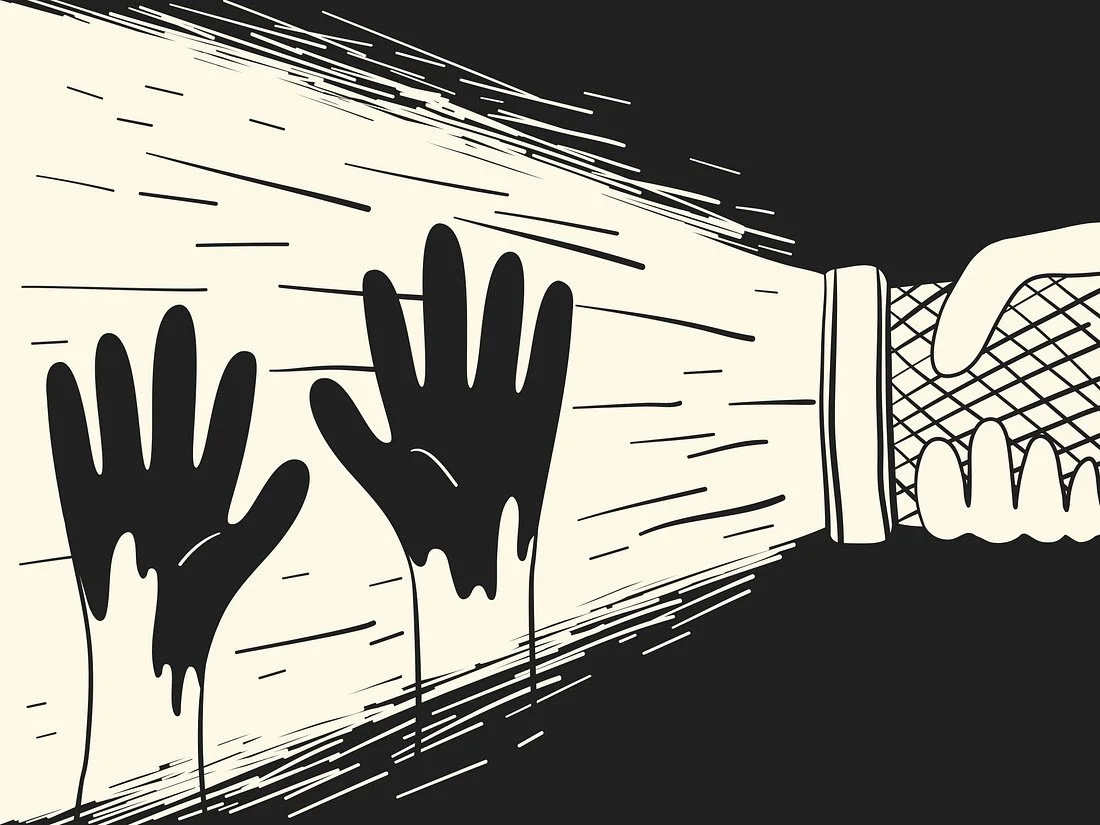
The Great Alone made me want to understand our appetite for these stories. Stories about women who endure. What happens when trauma is wrapped in descriptions of northern lights and midnight sun? When violence and beauty occupy the same paragraph, the same breath? Why do millions of readers reach for these narratives of female suffering and call them essential reading?
It’s the 1970’s. Ernt Allbright has inherited land in Alaska from a war buddy killed in Vietnam. When he tells his wife Cora they are moving, I remember feeling excited - Alaska, wilderness, a new beginning. Then I read Cora’s reaction. Memory fails me now. I cannot recall Hannah’s exact words. But something in how she phrased Cora’s response. I remember experiencing hesitation, perhaps, or the speed with which she surrendered her doubt. It settled like a stone in my chest.
Their daughter Leni, thirteen, follows because children follow. Hannah tells us this is a story about starting over. About healing through wilderness. About finding yourself in the last frontier. But I wanted to reach through the pages. To put my hand on Cora’s arm - gently, firmly. “You don’t have to go. If you have even the smallest inkling of no, sit with it. Just until you know for sure.”
Of course I couldn’t. Cora isn’t real.
But so many women are.
And like so many women, Cora discovers that her husband’s trauma becomes permission for violence. The isolated geography makes abuse invisible. There is no one to call. Nowhere to run in winter. A daughter learns to read her father’s moods the way sailors read weather: for survival.
Leni becomes expert at watching.
This is where the book begins speaking to me.
Leni notices everything. She must. The particular set of her father’s jaw - is it anger or merely concentration? The way his hands grip the steering wheel - white-knuckled or merely firm? The silence that fills the cabin - heavy with threat or simply the quiet of a winter afternoon?
She analyses. She predicts. She prepares her body for what might come. Someday this will be second nature. Perhaps it already is. Perhaps there is no longer a Leni who does not notice, who does not track, who does not read the atmospheric pressure of her father’s moods.
Hannah tells us this hypervigilance makes Leni strong. Resilient. A keen observer of the natural world - the tides, the changing light, the way darkness approaches in winter, first slowly, then all at once. But I kept thinking: this is NOT observation. A naturalist observes. A philosopher observes. A diarist observes. This is something else entirely. This is the way a deer watches the treeline. This is prey animal awareness, dressed in the language of coming-of-age.
There is a scene early in the book where Ernt hits Cora. They are standing in their new cabin - ramshackle, isolated, beautiful in the way Hannah describes everything in Alaska as beautiful. Leni watches.
She is learning, the narrative suggests. Learning about her father, about survival, about the harsh realities of frontier life.
But what is she actually learning? That her mother will not leave. That no one will help them. That beauty and violence can occupy the same space. That her job is to witness what happens and carry it alone. That her task - her sole purpose in this scene and every scene that follows - is to see what is happening and carry the knowledge of it alone.
Hannah returns to this dynamic throughout the book. Ernt’s violence escalates. Cora endures. Leni watches. The prose lavishes attention on Alaskan sunsets, the northern lights, the midnight sun. I fall in love with the language. I could not help myself. The violence happens in these beautiful spaces, which somehow makes it more terrible and also more palatable. Aestheticised. Contained within gorgeous description.
What does it do to a reader, I wonder, to consume violence this way? Wrapped in beauty. Framed as coming-of-age. Presented as the cost of loving a damaged man in a hard place.
What does it do to us, this learning to swallow brutality sweetened with prose?
Is this why we endure abuse from the hands of those we love - because we have trained ourselves to find beauty in the intervals between violence, to call the good moments enough?
Is this why we travel to glaciers we know are melting, photograph sunsets over oceans rising, consume the world’s beauty even as we participate in its destruction? We have learned to hold both. Violence and aurora borealis. Love and cruelty. Ecological collapse and Instagram aesthetics. The devastation and the beauty, always in the same breath, the same frame, the same consumable moment.
Hannah has made visible what social media taught us to do: aestheticise what should be unbearable. Make palatable what should make us stop, turn away, refuse to continue.
The Great Alone at on the New York Times bestseller list for months. Readers called it “powerful” and “heartbreaking” and “impossible to put down.” Book clubs across the world chose it. Women recommended it to other women. “What’s that Alaska book by Kristin Hannah?,” I had said. “It was so so good and memorable. Devastating but beautiful.”
Devastating but beautiful. As if the beauty somehow makes the devastation bearable. Worth consuming. There is a whole genre of these bestsellers about isolated women, abusive men, daughters who watch helplessly. Educated. Where the Crawdads Sing. My Absolute Darling. Woman trapped, woman suffering, woman somehow made magnificent through her suffering.
I think about Leni, watching. And I think about us, reading. We are doing the same thing, aren’t we? Bearing witness to violence we cannot stop. The difference is that Leni has no choice - she is trapped in that cabin, in that life, in that body. We chose to call it beautiful.
The Great Alone is a fabulous book. I do not dispute this. But beautiful? No. Beautiful writing, yes - Hannah is masterful with language, with pacing, with that kind of alchemy that kept me turning pages at midnight when I promised myself sleep. She can make you see Alaska, feel the bite of cold, taste the richness of salmon just pulled from the river. She can build tension until it lives in your shoulders, in your jaw, in the tight space between your ribs.
But this is not beauty. Beauty is not holding violence and aurora borealis in the same breath and calling the combination transcendent. Beauty is not witnessing a woman being beaten and then pausing to admire the midnight sun an hour later, a page later, a paragraph later.
There should be a different word for what this is. There is something else happening here. Something we do not have good language for, or perhaps language we are reluctant to use. We consume this violence because the prose makes it consumable. The descriptions of wilderness give us somewhere to rest our eyes between scenes of abuse. The natural beauty becomes a kind of aesthetic relief. A place the mind can go that is not the cabin, not the fists, not Leni’s helpless watching.
Hannah knows this, I think. The structure is deliberate. Violence, then beauty. Terror, then landscape. The rhythm of it is bearable because it alternates. We can read about Ernt hitting Cora because we know the next paragraph will give us mountains, light, the way ice forms on the lake.
This is craft. Hannah is very good at it.
Leni learns to live this way. Violence and beauty occupying the same space. Her father’s fists and the northern lights. The years of hypervigilance. The childhood spent reading moods instead of playing. A nervous system permanently attuned to threat, unable to rest even when the threat has passed.
And we learn to read this way. To turn pages through scenes of brutality because we know beauty is coming. To call it devastating but beautiful. To press the book into our friends’ hands and say, “You have to read this.”
But when I finished The Great Alone, I sat very still. Something had frozen in me. Not moved - frozen.
Is this what we’re doing in real life?
I think about the women I know who stay. Not in Alaskan cabins but in city apartments, suburban houses, relationships where they have learned to read atmospheric pressure the way Leni reads approaching storms. They have become experts at noticing. At predicting. With hypervigilance that looks like strength, like intuition, like love - until you recognise it as survival.
I think about how we consume the world now. Climate catastrophe and sunset photography. Structural violence and aspirational aesthetics. War and travel influencers visiting the ruins. We scroll through brutality wrapped in beautiful filters. We call it staying informed. Being aware. Bearing witness.
What does this do to us?
What does it do to our capacity to be horrified? To turn away? To refuse?
I loved The Great Alone. I consumed it eagerly. I recommended it. And now I cannot stop wondering: what have I learned to swallow? What have we all learned to watch, to aestheticise, to call beautiful enough to bear?
Could this be what it means to be human? To live with violence and aurora borealis in the same frame, the same feed, the same psychic space. To teach our children to read moods like weather. To mistake our hypervigilance for wisdom.
Or perhaps - and this is what terrifies me most - perhaps we have a choice? Perhaps we have always had a choice? And we keep choosing to watch, to consume, to turn the page, to scroll, to call it beautiful when we should be learning to look away.
Leni couldn’t look away.
Some of us can.
