
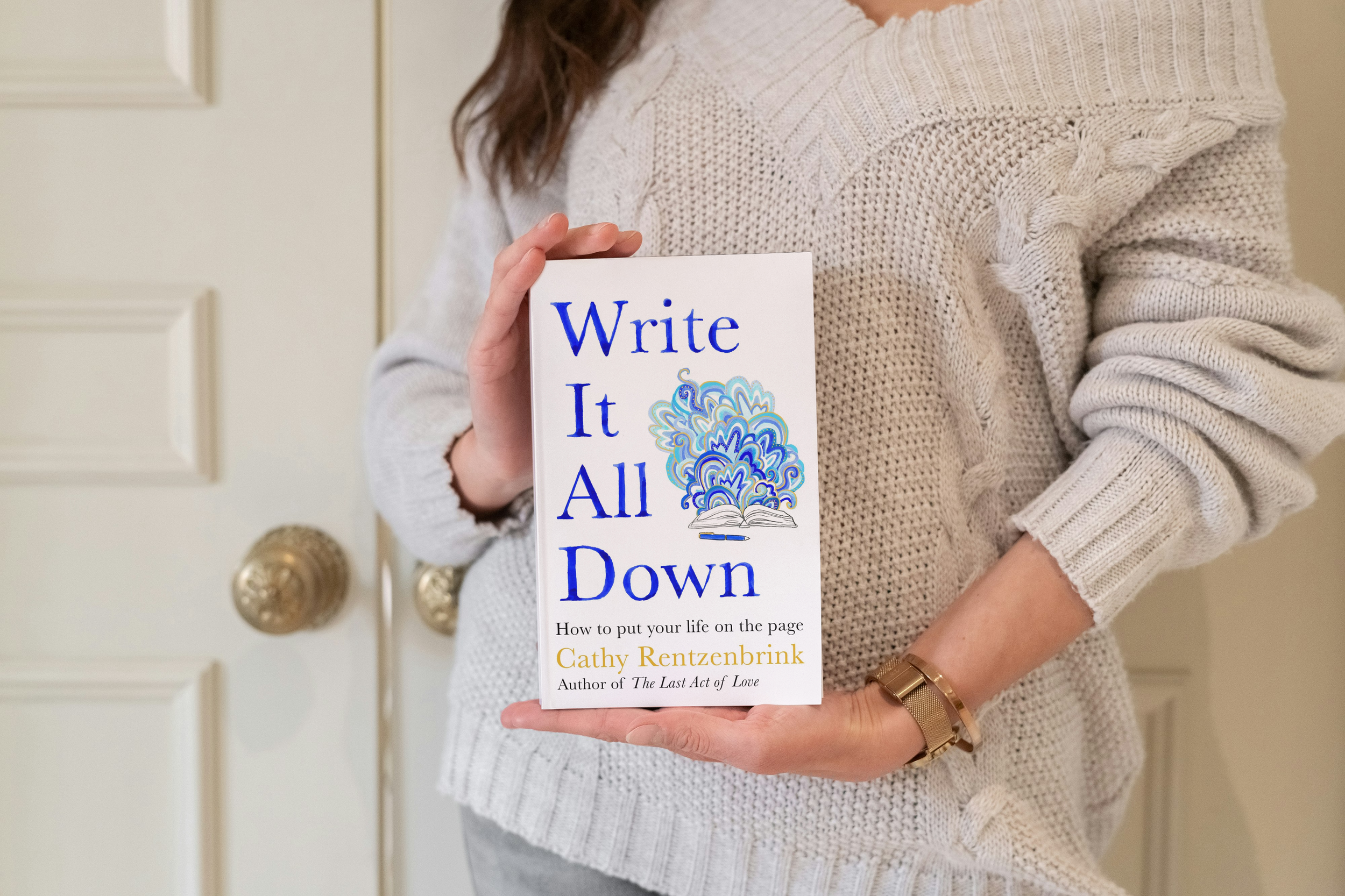
What Survives: On Cathy Rentzenbrink's Write It All Down
Most books about memoir writing are either craft manuals that treat your life as raw material to be shaped, or therapy sessions disguised as writing guides that promise catharsis through narrative. Cathy Rentzenbrink's Write It All Down: How to Put Your Life on the Page threatens to be the latter. The cover promises solace, the blurbs mention healing; but it's better than that suggests.
The first half reads like extended encouragement. Permission to write. Assurance that your story matters. The usual exercises: lists to make, memories to excavate, prompts to follow. This is the wellness-adjacent framing the genre requires, and if you're allergic to therapeutic language, you'll wince occasionally. But Rentzenbrink earned this material. She's taught memoir at Arvon and in prisons. She knows what stops people. That which is not lack of skill but lack of permission, the fear that no one cares, the worry about who you'll hurt.
Where the book earns its place on your shelf is the second half, when Rentzenbrink stops encouraging and starts teaching. Structure. Scene. Interiority. How to decide what to include. How to manage time in narrative. How to revise without losing the truth of what happened. These are the mechanics every memoirist needs, explained without pretension. No MFA jargon. No literary theory. Just clear instruction from someone who's done the work and knows what it costs.
What's valuable here - and when I say that, I mean, what predates the self-help overlay - is the basic practice Rentzenbrink describes: sitting alone with your life, trying to find language for what happened. Not because it heals you (though it might). Not because it makes you more self-aware (though it could). But because some experiences demand externalisation. Memory held only internally distorts. Writing it down structurally changes your relationship to it. You see what you think when you have to choose words for it.
This is old technology. People have always kept records of what happened to them in war, in grief, during illness. Diaries, letters, notebooks that never expected readers. The compulsion to document predates any notion that writing should make you feel better. It's just what humans do when holding everything in the mind becomes unbearable.
Rentzenbrink understands this, even when her book's framing doesn't quite say it. She's honest about the mess: that writing about family can damage relationships, that memoir raises ethical questions about other people's privacy, that getting your story down doesn't resolve the experience, but just makes it visible in a different way. She doesn't promise writing will fix you. She promises it will clarify what you're looking at, which is not the same thing.
The book includes a compendium of advice from other memoirists like Dolly Alderton, Adam Kay, Candice Carty-Williams, therefore offering you multiple approaches rather than one prescribed method. Some write daily. Some binge. Some need structure. Some need chaos. This is genuinely useful: the acknowledgment that there's no single way to do this, that you have to find what works for your life and temperament.
If you're already writing memoir, you might find the craft section too basic. If you're suspicious of anything that smells like self-help, the first half will test your patience. But if you've been carrying a story you can't quite write because you're not sure you're allowed, or you're afraid of what happens when you start looking directly at it, Rentzenbrink has written something clarifying.
What you're buying: a guide to the practice of sustained attention to your own experience.
How to sit with what happened.
How to find structure in chaos.
How to write scenes that carry emotional weight.
How to revise without sanitising.
The analog work of choosing words and arranging them until they approximate the truth.
Available now at Great Ave Ruins for $12 (RRP $28). I'm clearing inventory from my previous business, which means you get a legitimately useful book on memoir craft at less than half price. If you've been carrying a story you haven't written yet, this is worth owning. Buy here.
