
How Ordinary Became Extraordinary: The Structural Transformation of Wellness
There is a photograph, though you have likely never seen it, of a woman eating toast at a kitchen table in 1976. She is not photographed because the toast is artisanal or the table is mid-century modern or because she is about to post the image anywhere. She is photographed because she is someone's mother, someone's aunt, and the person holding the camera wanted to remember an ordinary Tuesday morning. The toast is simply toast. The eating is simply eating.
Fifty years later, breakfast has become unrecognisable.
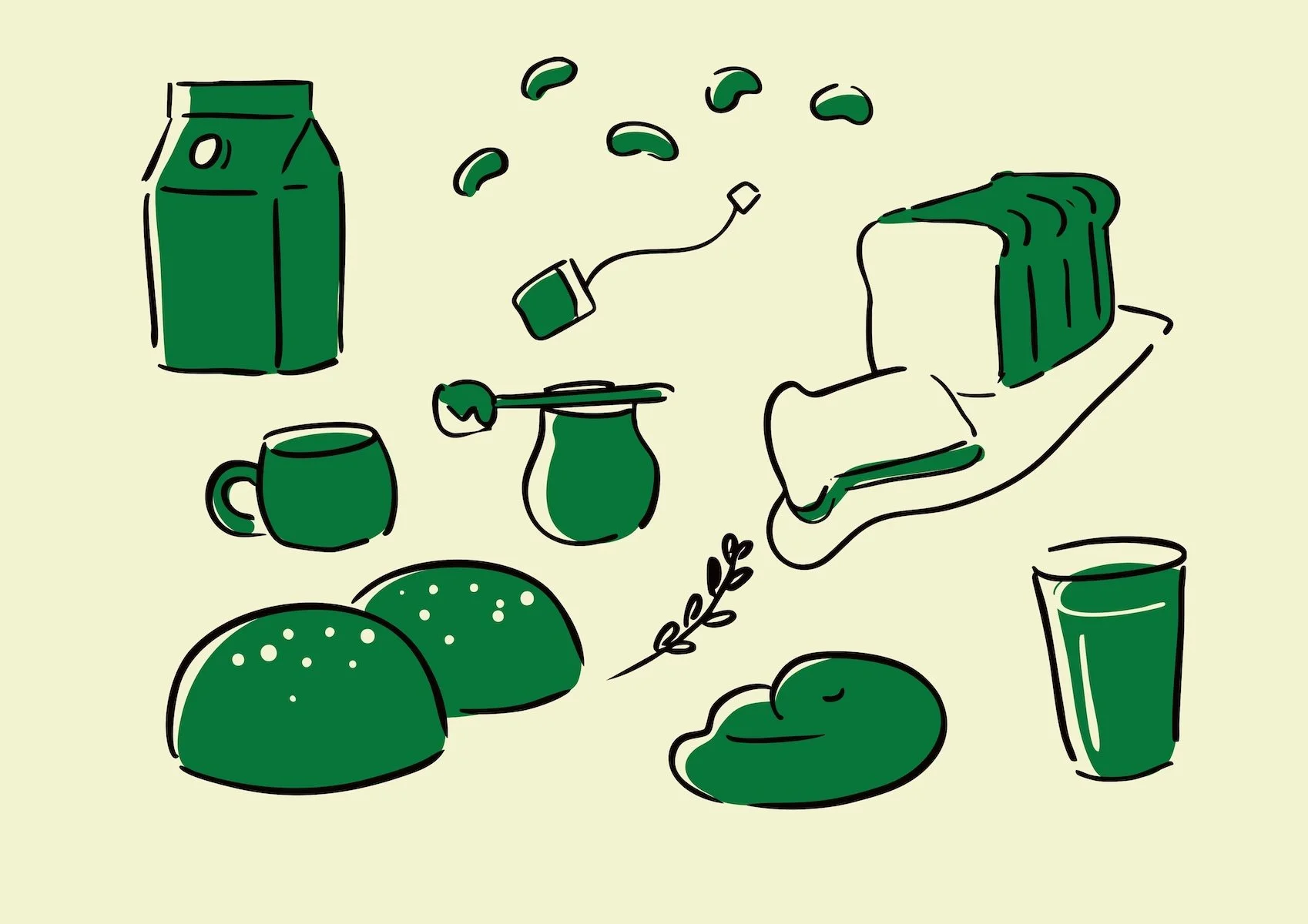
Well, not the food itself — toast is still toast, eggs are still eggs — but everything surrounding it. The decision-making apparatus. The expert guidance required. The tracking, the optimisation, the moral weight of choosing correctly. What was once the most ordinary act of daily life — eating something in the morning before the day begins — has become an elaborate performance requiring significant resources, specialised knowledge and continuous intervention.
This transformation did not happen overnight. It accumulated slowly, through a series of structural shifts that began in earnest in the early 1980s and accelerated with each passing decade. To understand how we arrived here, at this moment when eating breakfast requires navigation of macronutrient ratios, inflammatory profiles, glycemic responses and social media aesthetics; one must trace the mechanisms that converted the ordinary into the extraordinary.
Collective Became Individual
Through the 1980s and 1990s, the infrastructure that had supported ordinary wellness via its the corner markets where fresh food was accessible, neighbourhoods designed for walking, public spaces where people gathered without spending money, assumption that basic provision was a shared responsibility began to change shape.
What had been woven into the fabric of communities became something individuals had to arrange for themselves. The effect was subtle at first, then unmistakable: a transfer of work from systems to people. Where there had been collective structures making certain things reliably available, there were now gaps. And into those gaps, something emerged to fill the space.
Wellness, as an industry and as a concept, expanded precisely as these older forms of infrastructure transformed. But it did not propose rebuilding what had changed. It did not suggest better food systems, neighbourhoods designed for daily movement, public spaces that supported gathering. Instead, it offered individual solutions to what had been collective functions.
Buy this supplement. Join this gym. Track your metrics. Optimise yourself.
What had been a structural question — how communities support the basic needs of their members — was reframed as a personal project. And personal projects, unlike shared infrastructure, could be productised, branded and sold.
This proved profitable in ways that collective provision never could be. Food became "nutrition science" requiring expert interpretation. Sleep became "sleep hygiene" demanding specialised products. Movement became "fitness programming" necessitating professional guidance. Community became "wellness retreats" available for purchase. Each component of ordinary living was disaggregated, professionalised and repriced for premium markets.
Ordinary Knowledge Became Insufficient
The second mechanism was epistemic. A systematic repositioning of what had been common knowledge as inadequate without expert mediation.
Consider eating, which humans had been doing successfully for millennia. By the 1990s and 2000s, it had become so complex that ordinary people were positioned as fundamentally incompetent to feed themselves without guidance. Nutritional science — legitimate in its domain — expanded beyond disease treatment into the optimisation of normal function. You could not simply eat food and trust your appetite. You needed to understand macronutrient ratios, inflammatory markers, glycemic responses, gut microbiome balance.
The effect was not unlike what happened when literacy was controlled by clergy. The text — in this case, the body — became inaccessible to the person inhabiting it. Interpretation required priests, or in this case, nutritionists, naturopaths, functional medicine practitioners, wellness coaches.
Movement followed a similar trajectory. Walking to work, taking the stairs, playing with children — movement that had been incidental to living — was repositioned as insufficient. You needed structured exercise programming with periodisation, heart rate monitoring, recovery protocols. Your instincts about your own body, the knowledge accumulated through living in it for decades, could not be trusted.
Sleep underwent the same transformation. What had been something people simply did became sleep hygiene requiring weighted blankets, blue light filters, magnesium supplementation, temperature-controlled mattresses, white noise machines and analysis by specialists.
The professionalisation of daily life created new classes of experts whose authority rested on a premise: that ordinary people had lost, or perhaps never possessed, the knowledge to manage their own basic needs. Credentials proliferated — certifications in nutrition, in sleep coaching, in breathwork, in recovery. The barriers to entry, both financial and educational, ensured that access to "proper" self-care became increasingly stratified.
What had been ordinary knowledge, often passed between neighbours, learned through living, etc, became proprietary information requiring payment to access.
Measurement Became Management
The third mechanism was technological. The emergence of consumer wearables and tracking applications in the 2000s and 2010s created unprecedented capacity for self-surveillance.
The Fitbit, released in the 2000s, promised to help people "find their fit." What it actually did was create an expectation that movement should be quantified. Ten thousand steps became a target, then a minimum, then for some a source of anxiety when unmet. The Apple Watch, launched later, expanded the surveillance: heart rate, standing hours, exercise minutes, breathing patterns.
This measurement capacity created a subtle but significant shift in what it meant to care for oneself. If you could track something, you should track it. If you should track it, you were responsible for optimising it. What you did not measure became invisible, and what was invisible became neglected.
The quantified self movement, emerging largely from Silicon Valley, positioned this as empowerment. Knowledge was power. Data provided insight into the black box of the body. But what it actually created was an endless optimisation project with no defined endpoint. There was always another metric to improve, another variable to control, another intervention to test.
The technology fundamentally reframed the relationship between person and body. The body became something observed from outside rather than experienced from within.
Consumption Became Virtue
The fourth mechanism was economic, though it presented itself as ethical. As wealth inequality widened dramatically from the 1980s onward, and as traditional markers of class became more complicated, consumption became the primary method of signaling social position.
But wellness consumption offered something other luxury goods did not: moral justification.
The person buying organic produce at the farmers' market, attending $45 yoga classes, drinking $12 cold-pressed juices was not being ostentatious. They were being responsible. They cared about their health, about the environment, about supporting local farmers. They were investing in themselves, in longevity, in values.
This created moral dimensions to consumption choices that other forms of spending lacked. An expensive car was simply expensive. Expensive wellness products demonstrated virtue. You understood what your body needed. You valued quality over convenience. You were educated about health in ways others were not.
The moralisation of consumption did two things simultaneously. It justified premium pricing, and it created social stratification that appeared to be about knowledge and priorities rather than income, even though income remained the primary determinant of access.
Those who could not afford organic produce, boutique fitness classes, premium supplements were not simply priced out. They were positioned as not caring enough, not knowing enough, not prioritising their health. The structural barrier was reframed as a personal failing.
Gwyneth Paltrow's Goop, founded in 2008, exemplified this perfectly. The criticism Goop received often focused on the pseudoscience, but the more significant issue was the economic: it sold the idea that real wellness required significant wealth while positioning that requirement as about knowledge and values rather than class.
Infrastructure Collapsed
The fifth mechanism was spatial. As public infrastructure eroded through deliberate policy choices and neglect, the environmental conditions that had supported ordinary wellness disappeared.
Cities had once been built for walking. You walked to the market, to work, to school, to visit neighbours. Movement was woven into the structure of daily life. But as urban planning from the 1950s onward prioritised automobile traffic, as zoning separated residential from commercial areas, as suburbs sprawled without sidewalks or public transit, walking became something you had to do separately, intentionally, as "exercise."
Fresh food followed a similar pattern. Local markets, street vendors, neighborhood shops were replaced by supermarket chains, often located in areas requiring car access. In urban centers, rising real estate costs pushed small vendors out. Fresh food became something you traveled to, planned for, often paid significantly more for.
Public space itself — the parks, plazas, community centers where people once gathered without spending money — deteriorated or disappeared. Benches were removed to discourage loitering. The coffee shops, once a third place for gathering, became overcrowded or unaffordable for daily use in expensive cities.
Social connection, which had happened organically through proximity and public space, became something requiring explicit arrangement. And those arrangements increasingly took place in commercial settings: the $18 cocktail, the $30 brunch, the $40 fitness class where community was part of the package.
Wellness-as-purchase filled the voids left by infrastructure collapse, but it filled them only for those who could pay. The boutique gym with its community of regulars replaced the public park where neighbors once met. The meal delivery service replaced the neighbourhood market. The meditation app replaced the community center's free yoga class.
Each solution was individual, commercial and accessible only to those with disposable income. The commons had been privatised.
Adequacy Became Failure
The sixth mechanism was cultural. Media and marketing converged to reframe being fine as being insufficient.
Magazines had always sold aspiration, but promises became more extreme, more urgent. You could "unlock your best self," "maximize your potential," "achieve peak performance." The implicit message: your current self was inadequate. Your potential was unrealised. Your performance was suboptimal.
Social media, particularly Instagram after its launch, amplified this exponentially. Wellness influencers documented their morning routines in detail: meditation, journaling, lemon water, supplements, green smoothie, workout, cold shower. The performance of optimisation became content. And consuming that content created the sense that everyone else was doing more, trying harder, achieving better results.
Your ordinary breakfast— toast? youtiao? dosai? —looked inadequate next to someone's smoothie bowl topped with bee pollen, goji berries, hemp seeds and edible flowers, photographed in perfect morning light. Your regular sleep routine looked like negligence next to someone's eight-hour, REM-optimised, magnesium-supplemented, blue-light-free protocol.
What had been private and ordinary became public and spectacular. And the spectacular became the new baseline expectation.
Silicon Valley accelerated this by applying startup language to the body. The quantified self was obsessive cutting-edge. Biohacking was rational application of technology to human performance. Your body was not something to live in but something to optimise, to iterate on, to upgrade like software.
The message was clear: treating your body as anything less than a system requiring continuous improvement was accepting obsolescence.
The Mechanisms Reinforced Each Other
The withdrawal of public infrastructure created individual responsibility. Individual responsibility created market opportunity. Market opportunity attracted capital and created professional specialisation. Professional specialisation created complexity requiring expert guidance. Expert guidance created anxiety about doing it wrong. Anxiety created demand for tracking and measurement. Tracking created endless optimisation projects. Optimisation became a status performance. Status performance created aspiration. Aspiration created content. Content created comparison. Comparison created inadequacy. Inadequacy created more consumption.
The cycle was self-reinforcing and highly profitable. The practice itself had not changed. Toast was still toast. But the infrastructure surrounding it had changed completely.
Return Became Impossible
Going back to ordinary became nearly impossible, because ordinary no longer had structural support. The corner store that used to sell fresh eggs and bread had been replaced by a chain supermarket. The time that used to accommodate a simple breakfast had been consumed by longer work hours and longer commutes. The knowledge that used to be common — that eating something warm and filling in the morning would carry you through to lunch — had been professionalised into inaccessibility, wrapped in scientific language that made your grandmother's wisdom seem quaint at best, dangerous at worst.
The social acceptance of simple adequacy had been replaced by aspiration toward optimisation. To eat simple toast for breakfast was to risk being seen as not caring about your health, not understanding nutrition, not investing in yourself.
What Was Lost in Translation
The transformation was not accidental. It was structural, deliberate and enormously profitable. But something fundamental was lost in the translation of ordinary practice into wellness industry. The industry did not create wellness. Humans had been sustaining themselves, feeding themselves, moving through their days, sleeping, connecting with others for millennia before "wellness" existed as a consumer category. What the industry did was create scarcity around something that had been common, then sell access back at a premium.
It took what had been ordinary knowledge and made it proprietary. It took what had been public infrastructure and made it private service. It took what had been simply living and made it a performance requiring continuous investment.
And then it told us this was progress.
The woman eating toast at her kitchen table in 1976 was not unwell because she did not track her macros, did not know her glycemic response to white bread, did not optimise her cortisol levels with adaptogenic supplements. She ate, and then went about her day.
Perhaps that was always enough. Perhaps, in our rush to improve everything, to optimise everything, to make everything extraordinary, we lost sight of what ordinary actually provided: the simple, quiet adequacy of daily life, accessible to nearly everyone, requiring nothing but attention to basic human needs.
We cannot go back to 1976. The infrastructure that supported that kind of ordinary no longer exists. But we might ask ourselves what we have gained in exchange for what we lost. Whether breakfast needed to become this complicated. Whether caring for ourselves needed to become this expensive. Whether being fine ever needed to become insufficient.
The answers, like most things about wellness, are probably simpler than we have been led to believe.
