
The Cost of the Surface: What HSPs Pay to Appear Okay
We are all walking around on each other's crusts. Mistaking the managed surface for the person. The cost of holding yourself together so well is that no one knows how to hold you.
The first time I was labelled so sensitive, I was sixteen, maybe seventeen. A hotel room in Genting Highlands, shared with my mother and others. Eyes threatening to spill, face buried in a pillow so no one would have to witness the inconvenience of my feeling.
The cause wasn't new. I had been living it most of my life. I would be brought along on shopping trips — told it was a shopping trip — and for the umpteenth time I would allow myself the dangerous luxury of hoping. Of wanting. Of asking. And be told no. The no almost always accompanied by ridicule. For wanting something I was too old for. For wanting at all.
It probably wasn't the first time someone had called me so sensitive. But it's the first time my memory marked it.
Because I know I stopped asking after that.
Decades later, I would reflect and realise that I have never asked for anything from anyone since. I have expected. I have demanded. I have hoped and wished and prayed and waited and ached. But asked — plainly, vulnerably, without armour — no. Not since then. Asking requires believing you might be worthy of receiving. And I stopped believing that in a hotel room in Genting Highlands with my face in a pillow.
Somewhere between that pillow and the countless lessons that followed, I developed an understanding that I have only recently begun to question. That people who love you will know what you want. That they will want to give it to you. That you will never have to ask; because if you were truly worthy of their love, they would already be giving. And if they weren't giving, the conclusion was simple: they didn't value you enough. Asking, in this framework, was not vulnerability. It was confession. Proof that you had not been chosen clearly enough to be seen without words.
“Pick me, choose me, love me.”
I bled for Meredith Grey when she said that. Still do. That line lives in a part of me that doesn't get quieter with age. There is a word missing from the English language — I have looked for it and not found it. The word for what that feeling is. That blend of shame and self-abandonment and the undignified reaching for love that matches yours in depth if not in manner. Not the same expression. Just the same investment. The same willingness.
The Portuguese have Saudade¹, and the Germans have Sehnsucht² but none of them hold the specific humiliation of wanting to be chosen by someone who is standing right there and not choosing. Of knowing you are asking for something that should not require asking. What is the word for that?
HSP
I would be in my mid-thirties before I chanced upon the term Highly Sensitive Person. I remember how I received it. With pity, mostly. How crippling that must be, I thought, to move through the world with your nerve endings on the outside.
Fast forward to my early forties, I’d hear it again. This time over lunch with an acquaintance who’d use it in reference to us both. “… for HSPs like us,” she had said. I remember pausing mid-chew. My brain quietly working the abbreviation. Highly Sensitive Person. And then — puzzlement. Me?
The walls were so strong by then. So thoroughly constructed, so long inhabited, that it would be years before I connected that lunch to the pillow in Genting Highlands. You don't build walls like that unless something needed protecting. And walls, well, they can be amazeballs. They work so well that eventually you stop noticing them. You stop feeling the effort of maintenance. The surface becomes so practiced, so inhabited, that you mistake it for your actual self. And at some point, you can't remember exactly when, you stopped knowing the difference between choosing not to feel and simply not feeling anymore.
But perhaps it was midlife, or perhaps it was journaling; the sixteen-year-old with her face in a pillow came back the way suppressed things always do — breathless, overwhelming, and screaming to be heard.
And somewhere in the returning, I heard Meredith Grey again.
OTHER PEOPLE’S PILLOWS
Except I am no longer a teenager asking for something on a designated shopping trip. I am not a woman in my twenties expecting a world full of mind readers. I am a mother who taught her child to be self-possessed, to know his worth, to name his needs clearly and to ask for what he deserves. To leave rooms that don't honour him.
And yet. I am now painfully aware that the room is filled with broken people too. People who are mind readers, and people who aren't. Pick me, choose me, love me takes on a different weight entirely when the withholding is not cruelty but limitation. When the room is filled with other sixteen-year-olds, each with their own pillow.
THE COST OF THE SURFACE
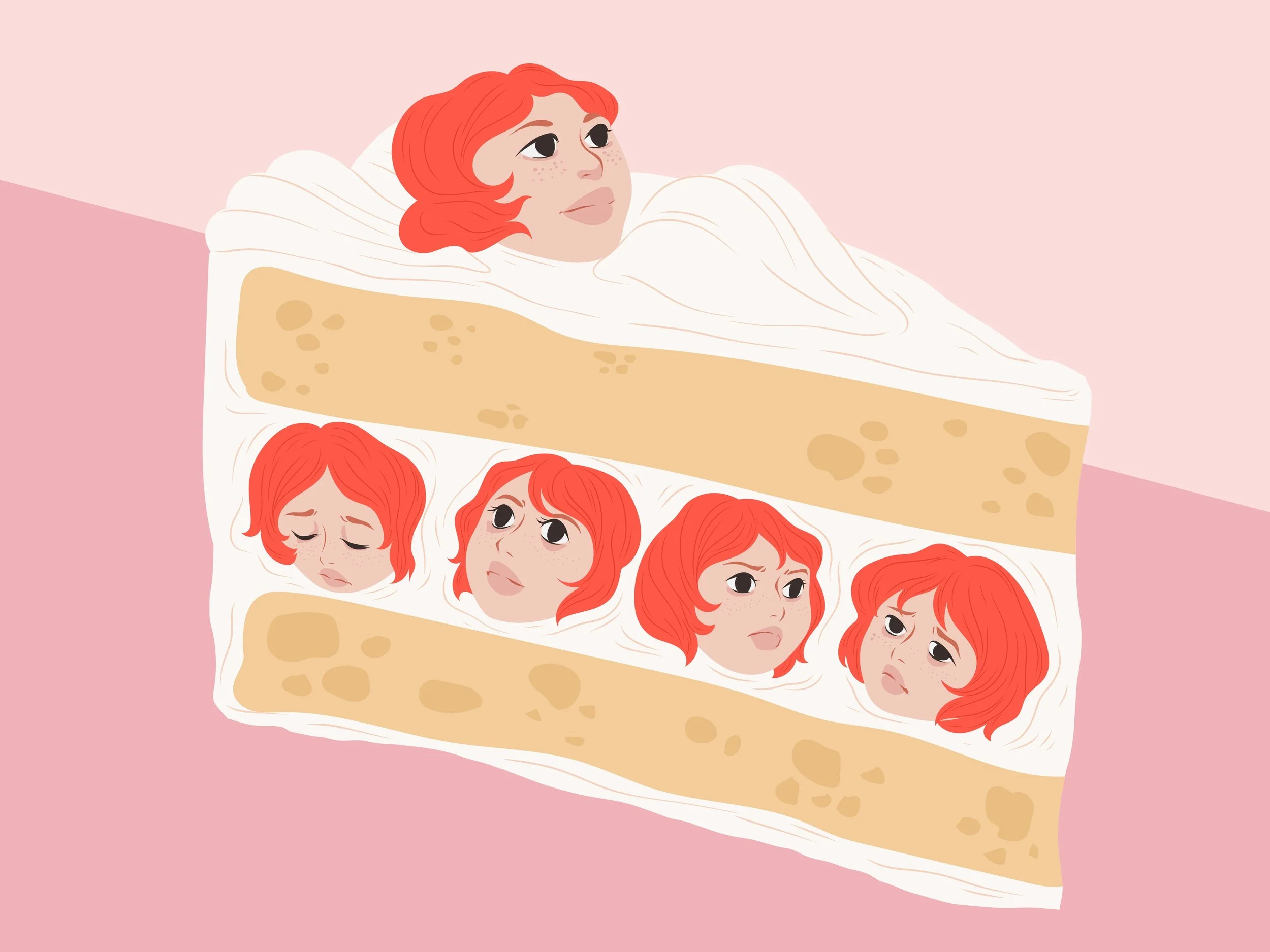
Geologists have a term for the thin, liveable layer of earth we build our lives on. The crust. Stable enough to hold cities, roads, the weight of ordinary days. What we don't discuss at dinner is what lies beneath it. The mantle, churning slowly, impossibly hot, under pressures we have no daily language for.
I have been carving out my crust. From above, I think it looks like maturity. Like equanimity. Like a woman who had done the work, learned the lessons, stopped expecting the world to be a mind reader.
But the mantle constitutes approximately 84% of the Earth's total volume. It is the largest, heaviest, most consequential part of what the Earth is, and we rarely speak of it. We build our cities on the crust and call it solid ground, never pausing to consider what is churning beneath it, what impossible pressures it is absorbing so that we may go about our ordinary days undisturbed.
To be highly sensitive is to be mostly mantle. To carry that volume, that heat, that depth, that weight while maintaining the thin liveable surface the world is comfortable standing on. The crust is not neutral territory. It is an ongoing, invisible labour of appearing to be simply ground.
The surface holds. But it costs.
Ecclesiastes knew this. Vanity of vanities, he (King Solomon?) wrote, all is vanity — the Hebrew word hevel, meaning breath, vapour, the thing that appears solid and passes through your fingers. The Stoics called it apatheia — not indifference, as we've mistranslated it, but freedom from being ruled by feeling. They made it sound like liberation. They didn't mention the maintenance.
Perhaps the grass is greener on the pragmatic side. Perhaps those who feel less move through the world with a friction I will never fully understand. Perhaps the crust for them, is simply, ground. For me it is a scab. A wound that wants to be tended, loved, allowed to dermis — to grow new skin from the inside out rather than be sealed over from the outside in. And I find it impossibly difficult to make peace with the realisation that not everyone sees it this way. That what I experience as an open, living, breathing thing which some people walk across without noticing. To them, it is simply ground.
The cost of my crust is invisibility.
I choose not to call it self-denial. Self-denial would require a verdict. A decision to wall off the mantle permanently, to let the crust become the whole story. I am not ready for that verdict. I am not sure it is even the right one.
Balance has always been where I have been most myself. Most alive. The crust and the mantle, both present, both honoured. The surface steady and functional and liveable, while the 84% beneath it is welcomed. Desired. Held carefully in the hands of people who look at the ground being offered and understand, without being told, that it is not the whole of what is there.
That is the thing, isn't it. We are all of us walking around on each other's crusts. Mistaking the managed surface for the person. Receiving the performance and calling it intimacy. Moving across someone's careful, costly ground without once asking what it took to pave it.
The cost of the surface is invisibility. But perhaps the deeper cost; the one we don't talk about at dinner, the one that lives in the mantle with all the other unspeakable pressures is this: That we have become so skilled at holding ourselves together, that many amongst us have lost the ability to touch the mantle beneath.
¹ Saudade Portuguese. A melancholic longing for something loved and lost, or loved and never fully possessed. It aches, but beautifully. It has been called untranslatable, which is perhaps why the Portuguese are so good at fado.
² Sehnsucht German. An intense yearning for something just beyond reach, often something you cannot fully name. C.S. Lewis used it to describe the inconsolable longing at the heart of human experience. It reaches, but gracefully.
