
Palimpsests of the Self: Epistemic Injustice, Cassandra's Curse, and the Body's Unerased Records
An exploration of how disbelief scrapes away not just testimony, but the very legibility of a life; and what it takes to read the faint marks that remain.
“Can you describe this?”
And I answered, “Yes, I can.”
Then something that looked like a smile passed over
what once had been her face.
— Anna Akhmatova, Requiem, 1940
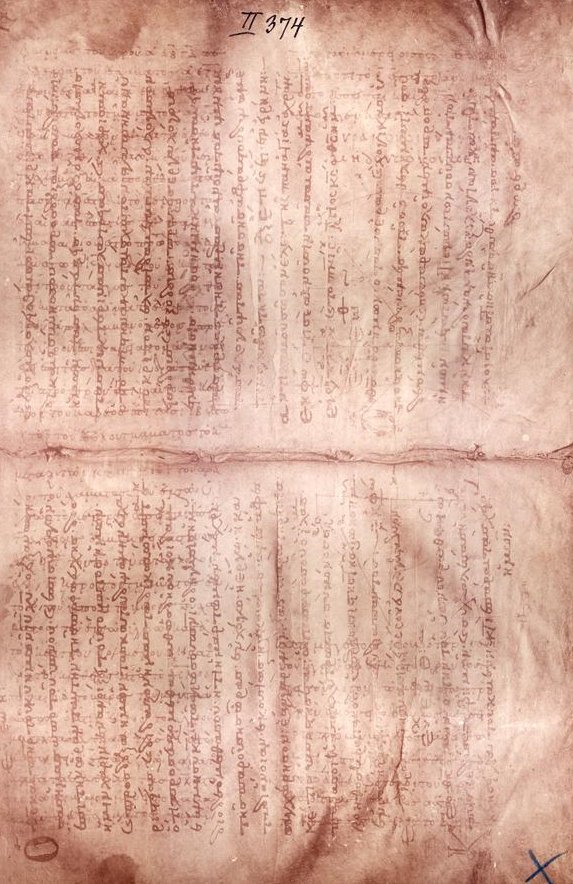
In the early 1900s, Danish scholar Johan Ludvig Heiberg found, in a thirteenth-century Greek Orthodox prayer book written on vellum, something older and stranger still. Beneath the prayers, faint and ghostly in the parchment, lay the two-thousand-year-old mathematical proofs of Archimedes.
Sometime in the thirteenth century, a monk took this costly skin of vellum and, with the practical faith of someone making use of what was at hand, scraped away the older writing. He laid his liturgy over it. The sacred over the merely human record of thought.
And yet the page, like the mind, is never so simple a vessel. Ink does not disappear without residue. Pressure leaves memory in the fibers. What was erased remains, faintly and obstinately, in the body of the thing itself, waiting through centuries for another kind of attention, another wavelength of seeing.
I. The Structure of Testimony
Fast forward to 1990s, philosopher Miranda Fricker began to name a shadow moral philosophy had left unlit: epistemic injustice, a harm not to the body or purse or station, but to the person as knower. To the testimony of their own lived truth, refused a hearing. She called its purest form testimonial injustice, that subtle deflation of credibility where one's words about one's own life arrive already discounted, not with blunt dismissal but in the softest mechanics of disbelief: a hesitation before reply, a question that reframes as it inquires, a tone whose gentleness corrects.
The wound deepens not in isolation but in accumulation, distinct from mere quarrel. Each discrediting does not only sting in the moment, but also reaches back through time, unmaking the testimony that preceded it. If this cannot be trusted as yours, the hidden logic whispers, then perhaps that could not be either. The record of the self does not merely stall. It revises itself in the negative, line by line, until what was once spoken grows faint as parchment scraped clean, waiting for a different kind of light to make it legible again.
II. The Curse Was Never the Knowing
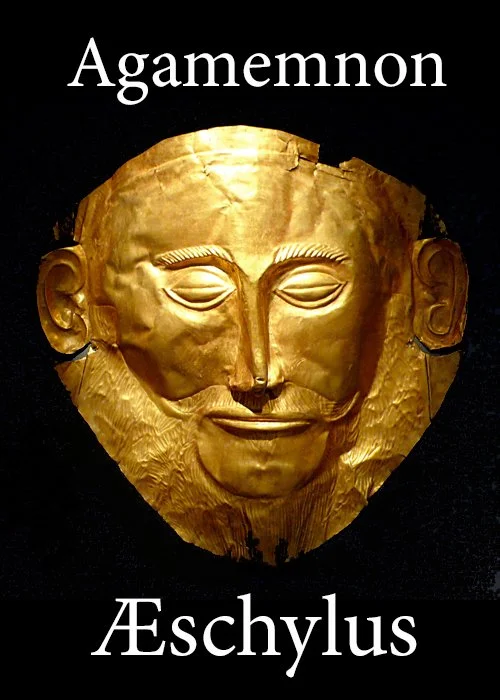
What most people remember about Cassandra is the punishment. Apollo’s curse that her true prophecies would never be believed. She would see Troy’s fall, the burning city, the deaths uncoiling like smoke through the streets, and she would speak it all plainly, only to find her words dissolving into air. This is the part that enters the language, that gives us her name as shorthand for the tragedy of foresight: the one who sees clearly but is never seen in return.
What fades from memory is the sequence, the tender and treacherous order of it all. Apollo first gave her the gift of prophecy, a lover’s offering poured bright as temple oil into the basin of her mind. She received it — drank it down, let it sharpen her gaze until the world’s hidden seams began to glisten. Only then did she refuse him. Unable to revoke what a god had granted, he twisted the gift instead, spitting malice into the clause: You will know. You will always know. And no one will believe you.
The knowing came first. It was luminous, unasked-for, streaming through her own encounters with the god, with the world she had already begun to see through. The curse was never the denial of knowledge. She would go on seeing, her vision cut finer with every passing season. No, the curse was the denial of her account of it, of her right to stand credible before the world that needed her sight most.
She spoke anyway. This receives the least attention, and perhaps the deepest reverence. She did not go quiet. She did not fold her knowledge back into herself and let it smolder there. She stood at the walls of Troy as the wooden horse waited below, its vast flank gleaming innocent in the dusk, and she said what she saw: The Greeks have left it. Do not bring it inside. Her voice carried clear across the gathering dusk. They called her mad. They turned from her with the indulgent pity reserved for the raving.
There is bittersweet beauty in continuing to testify to what you have witnessed when the testimony itself is what keeps being scraped away. It gleams most fiercely not in the hope of being believed, but in the act of utterance itself — the refusal to let erasure have the final mark. Cassandra did not prophesy to win over her hearers. She prophesied because she had seen, because seeing demanded speaking, because the truth she carried was heavier than the silence they imposed. And in that endurance — lush and unyielding as the laurel that crowns the temples of forgotten gods — she became something more than her curse. She became its witness.
III. What the Body Knows Before the Mind Names It
“Testimonial injustice occurs when prejudice causes a hearer to give a deflated level of credibility to a speaker’s word.”
There comes a moment, and those who have weathered Cassandra's curse in the softer wars of daily life know it with cellular clarity, when the upset ceases to tally by ordinary arithmetic. Like her prophecies dismissed as madness, no single incident accounts for it. The unkind word stands alone as explicable. The joke that lands crooked, the conversation that frays at its ending, each in isolation too small to warrant the deepening churn within. And so the nervous system itself enters the ledger of what cannot be trusted. You are too sensitive. You are reading too much into it. You are raving like her.
What stirs beneath is simpler, and more ancient, than sensitivity, the same wordless insistence that drove Cassandra to the walls of Troy. The body keeps its own ledger, luminous and relentless. It tracks not events but their echo, the consistency of the ground underfoot, whether words spoken yesterday still hold their shape today, whether the shared story endures as mutual or unilaterally rewritten. Below the mind's horizon, in the grammar of breath and pulse, it issues only a low, persistent alarm: something here does not cohere.
When that alarm sounds over what seems trivial, a tone that tilts wrong, a sentence whose shadow lingers, the reflex turns inward, as it did for her hearers turning from the prophet's cry. What is wrong with me, that I keep meeting the world this way? The audit falls first on your own instrument, silencing the one thing that has been testifying truly all along.
The monks who scraped the Archimedes palimpsest did not merely erase ink from vellum. In the act of scraping, they fashioned a page that proclaimed its own innocence, a surface insisting it had always been blank, that the prayers now written there comprised the whole of its truth. Anyone turning its pages, feeling the faint dissonance, some subtle unevenness in the skin, some shadow the eye could not name, was left to doubt not the page, but their own capacity to read it, precisely as Troy doubted the prophet at its gates. Devotion had covered the proofs, and called the covering complete. The strangeness belonged to the reader, not the book.
IV. The Ones Who Knew
“She is a wretch precisely because she is a narratable self who, by losing her story, has lost her identity.”
And here the cruelty sharpens, for the rewriting of shared reality lands only through intimacy. A stranger cannot claim you fabricated the memories etched into your own body. They lack access to the room, the hour, the words exchanged there. Only the one who stood witness beside you can turn and say those moments never were. Only the one to whom you entrusted the full account.
Philosopher Adriana Cavarero draws the line between what we are and who we are. What we are belongs to attributes anyone might name: our roles, our traits, our visible outlines. But who we are emerges only in relation, narrated through the listener who receives and recognises us. We do not merely share facts when we tell our story. We hand someone the grammar of our own legibility, the terms by which we might be known.
When that chosen witness becomes the one who contests not just details but the shape of what was lived — when they scrape away not ink but the mutual record of what passed between you — the wound transcends the relational. It becomes ontological. It asks whether you can be known at all, whether the story that makes you legible can stand un-revised.
Cassandra had already learned this wound. She had spoken into the void of family disbelief, her city's refusal, the long loneliness of the unwitnessed seer who carries truth without harbour. And still she stood at the walls, still she spoke. Not from stubbornness, but because the alternative was surrender to the scraping — to let the prayer book claim its innocence, to let devotion erase discovery, to become in time a person who no longer trusted the faint marks pressed into the skin of her own remembering.
V. Different Light
Heiberg could not fully read the Archimedes text with naked eye or magnifying glass. Even photography yielded only fragments. It took until 1999, when scholars at the Walters Art Museum turned multispectral imaging and X-ray fluorescence to the palimpsest, for the hidden pages to speak clearly. Seven hundred fifty years the vellum had carried those marks through plague, fire, Ottoman conquest, world wars, auctions, and court battles. Lost, rediscovered, fought over. And through all of it, the deformation in the calfskin held steady. The proofs had never left. They only waited for light capable of seeing them.
The story could end as triumph. Truth rises. Monks proven wrong. Archimedes restored. But what lingers for me in the archivists' accounts is something gentler, more material. The parchment did not wait with intention or protest. It held what it held the way any body holds what has pressed deeply into it: not by choice but by the nature of its making. The marks endured because they had been made. Because the original stylus had borne real weight. Because something true had once occurred there, and the skin remembered.
Miranda Fricker closes her work on epistemic injustice not with verdict but with practice. The antidote to testimonial injustice lies not in better judgment alone, but in testimonial justice — an active habit of receiving others' accounts with the credibility they merit. It means resisting the reflex to discount. It means holding space for someone as a reliable witness to their own life, particularly when their story proves inconvenient, when it asks the listener to revise a simpler record they prefer.
This virtue does not bloom spontaneously. It must be tended. It asks something rare of those who would rather the page stay clean: to see not what confirms their prayer book, but what the different light reveals beneath it.
Cassandra survived Troy. This is also the part that goes missing in the retelling. She was taken by Agamemnon as a slave, and she told him too. She told him what waited for him at home, the bath and the blade, and he did not believe her either. She was right, and she was right, and she was right, and no one who heard her counted her rightness as a reason to listen next time. The accuracy of the testimony was never the point. The point was the discount. The point was the clause that had been added to her gift.
But she had the gift. The curse was never the knowing. The curse was only the condition attached to the telling. And conditions — even ancient ones, even those attached by gods — are not the same thing as the truth of what was seen.
The marks remain in the skin of the thing.
They wait for different light.
They do not need to be believed in order to be there.
