
Monsoon Music Festival, Hanoi
We imagine that history happens to places. But history is just the accumulation of presence. Of nights like this one. Of people who came for ordinary reasons and left traces they never intended to leave.
A music festival that somehow felt polite, which is not a word I expected to find myself reaching for at 10pm inside a UNESCO World Heritage Site with bass moving through my chest. But that's what it was. Thousands of people of every age, colour, shape, provenance — welcomed, welcoming, spilling into each other without friction. Hanoi in late October had surprised my Singaporean body with its cold, a breeze I had no reference for, layered against humidity I almost did. It felt, improbably, wonderful.
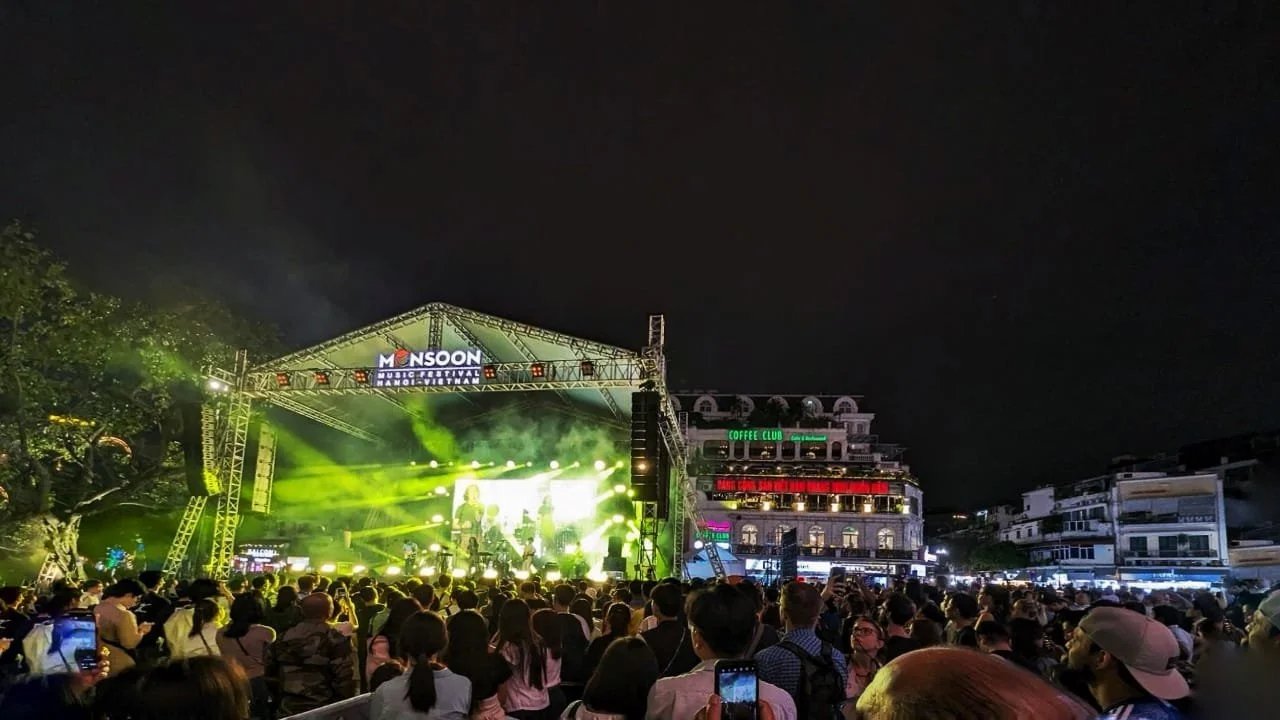
I had stepped out of the crowd to find ice cream. Everyone seemed to have one. I joined them. And that's when I saw it: the shape of the festival against the dark night sky. The stage lights and rigging climbing upward, enormous and temporary, blazing against a darkness that had been watching this particular patch of earth for over a thousand years. The music was everywhere. The walls of the Imperial Citadel of Thăng Long were holding it. And me? I was there, holding my ice cream, and realising I was standing inside a question.
The Imperial Citadel has been many things. A seat of dynastic power for nearly nine centuries. A French military garrison. A UNESCO World Heritage Site. And since 2014, once a year, a music festival. Each new claim sinking into the layers below it like dinosaurs and fossils settle.
Historians call this a palimpsest, meaning a manuscript scraped clean and written over, but never fully erased. The ghost of the original text bleeds through. The Citadel is a structural palimpsest. You can see the dynasties in the foundations if you know where to look. You can find the French barracks sitting on top of royal grounds. And if you were there in October 2023, you could find tens and thousands of people standing on top of all of it, licking ice cream, watching light beams climb a sky that has seen everything.
The question that started forming in me was not whether the music belonged there. It was something stranger: what was the stone doing to the music?
Stone remembers differently than we do. Doesn’t it?
We remember in narrative. The beginnings, middles, the stories we tell to make sense of what happened. Stone remembers in pressure. In weight. In the way a wall absorbs sound and gives it back slightly changed, slightly older than when it arrived.
We talk about heritage sites as if preservation is the point. As if the goal is to hold something still long enough for the future to find it intact. But the Citadel has never been still. It has survived precisely because each generation found a reason to inhabit it, to claim it, repurpose it, build over it, argue about it.
I couldn't have told you any of this while I was standing there. I was listening to music. I was cold in a way that felt good. I was holding ice cream in a crowd of strangers who all felt, improbably, like neighbours. Meanwhile, the bass was moving through foundations that had held imperial courts, French ammunition, wartime silences. It was moving through a thousand years of human insistence that this particular patch of earth mattered.
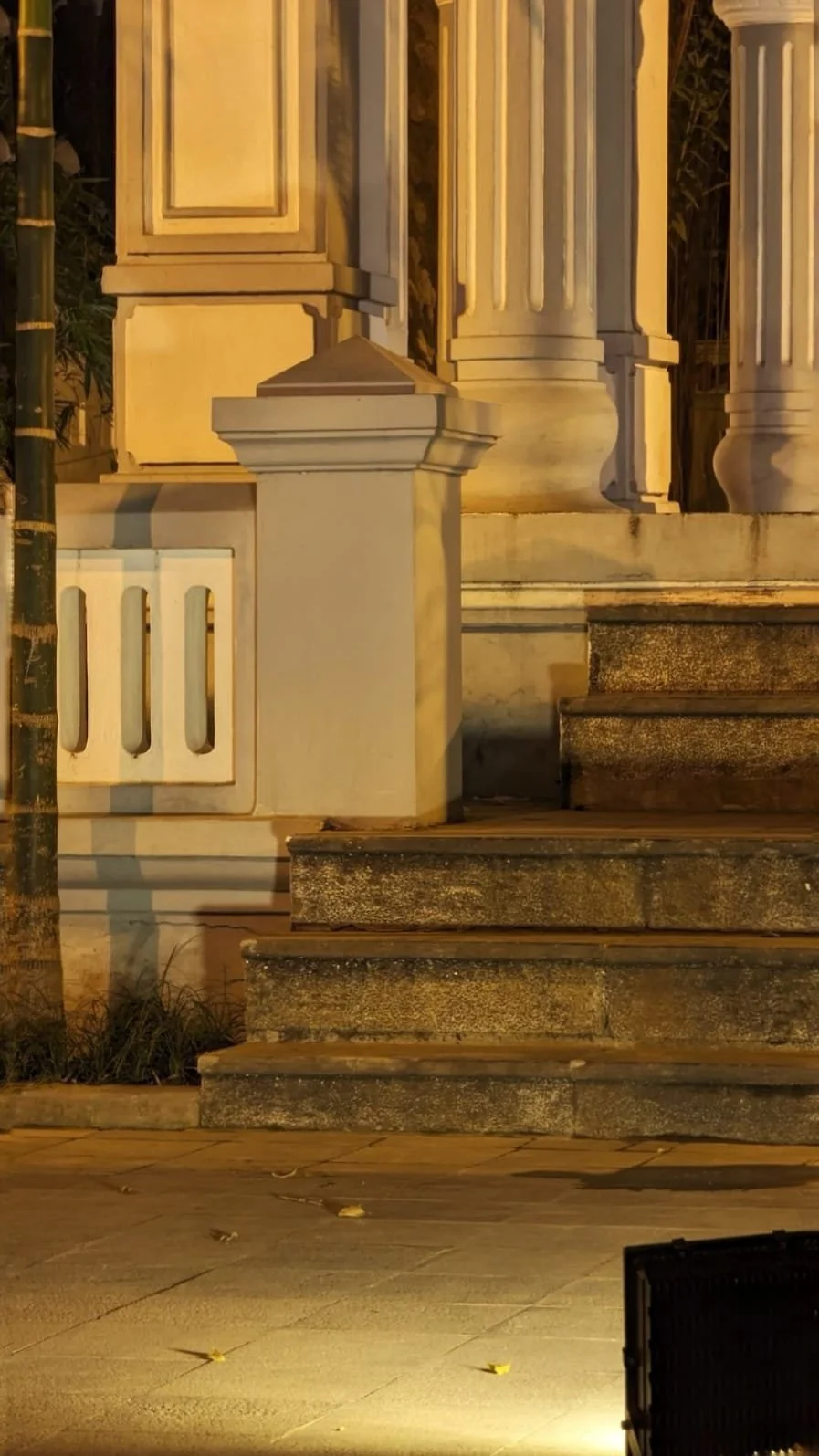
Sound does this — enters surfaces, leaves traces. Cathedrals are built tall not just for God but for resonance, for the way stone and height conspire to make the human voice feel larger than itself. The Citadel wasn't built for music. It was built for power, which is perhaps the same aspiration in a different register.
The festival was enormous and vivid and alive. The walls were older than the idea of the festival. Both things were true at the same time, and neither cancelled the other out. This is what ruins do when they refuse to become museums. They insist on remaining in conversation with the present. The Citadel has never been a dead site. The festival was the latest sentence in a very long document.
And the tens of thousands of people who came for the music were participating in the document whether they knew it or not. Presence is its own form of inscription. You don't have to understand a place to leave a mark on it. You don't have to be paying attention to be part of what gets remembered.
The night before I flew home, I returned to the Citadel. The festival was over. The lights packed away. The walls holding the silence.
And somewhere in the sediment of that October night, there is a woman with ice cream, paying attention. Barely. But there.
